



India’s gem and jewelry sector is celebrating what it calls a turning point: zero-duty access for diamonds and colored gemstones to the United States.
But before the trade begins recalibrating price sheets, it’s important to understand one key detail — the announcement is part of an Interim Agreement framework, not a finalized trade deal.
Gary Roskin
Roskin Gem News Report
According to reporting in The Economic Times, Indian industry leaders described the move as a breakthrough after a year that saw India’s cut and polished diamond exports to the U.S. fall more than 60 percent, from $3.64 billion to $1.45 billion.
Under the announced framework, tariffs on diamonds and colored gemstones would move to zero, while jewelry would remain at 18 percent. Industry leaders in India called the development a “game-changer,” particularly for exporters who have struggled with tariff-driven loss of competitiveness over the past year.
The enthusiasm is understandable.
But implementation is not automatic.
Meanwhile, the American Gem Trade Association (AGTA) is urging members to separate the announcement from the execution.
During a tariff seminar at AGTA GemFair Tucson, (see separate feature story below) AGTA CEO John W. Ford Sr. addressed the distinction directly.
“When the president… stand[s] up and they say, ‘we’ve reached a deal,’ that means they have a framework agreement,” Ford explained.
In other words: directionally positive — but not done.
Ford cautioned that headline language can blur the line between announcement and enforcement. “Just because they announce it… it’s not as simple as just a symbolic trade agreement… that you hear broadcast in the news.”
What follows is less visible — and far more procedural.
“After the principals make an agreement, then the bureaucrats on both sides have to write the agreement,” Ford said. “Then the principals have to agree to the agreement.”
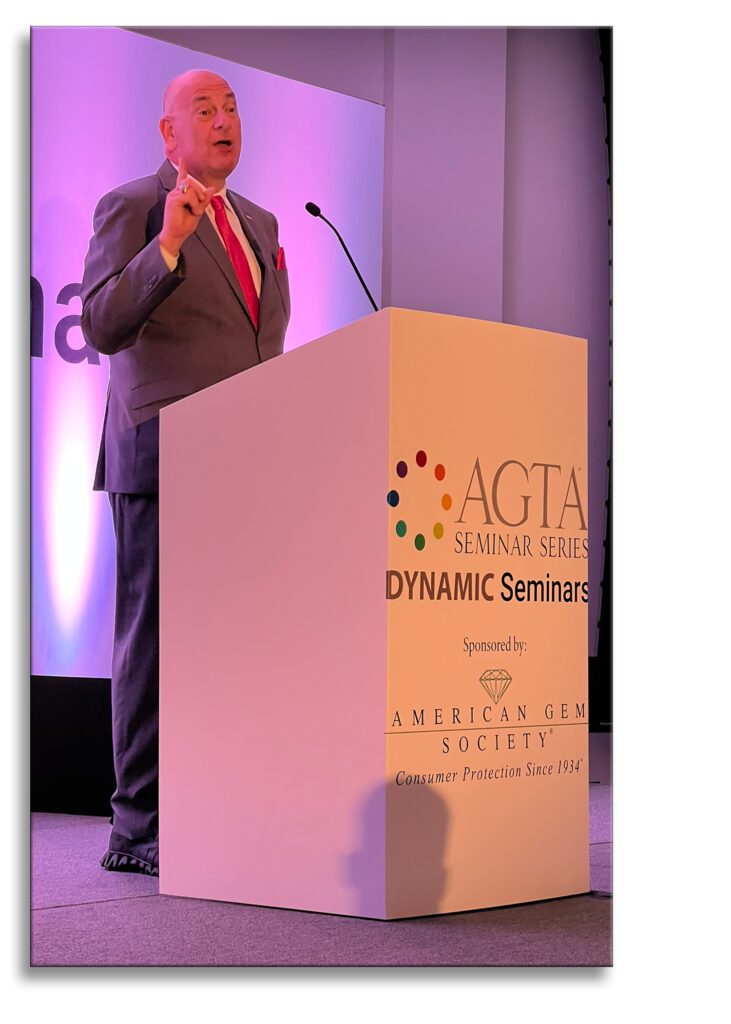
Photo by Gary Roskin
Only then does it move from press conference to policy.
“That’s when it’s official, when it’s actually signed,” he said — and crucially for importers — “you cannot get a P tap until they have a signed agreement.”
That distinction matters for importers.
Under the Potential Tariff Adjustments for Aligned Partners (PTAAP) program, eligibility alone does not trigger zero-duty treatment. A signed agreement does.
In practical terms, a framework announcement signals intent. It does not yet change the rate assessed at customs.
For Indian exporters, the framework offers real momentum and the prospect of restored competitiveness in their largest market. For U.S. buyers and importers, however, the operative question remains timing.
Until agreements are formally written, approved, and signed by both governments, zero tariffs remain a policy objective — not yet a line item on a customs invoice.
For now, the direction is encouraging. The paperwork is still in motion.
Tap here for more on the AGTA’s current progress on Tariffs.