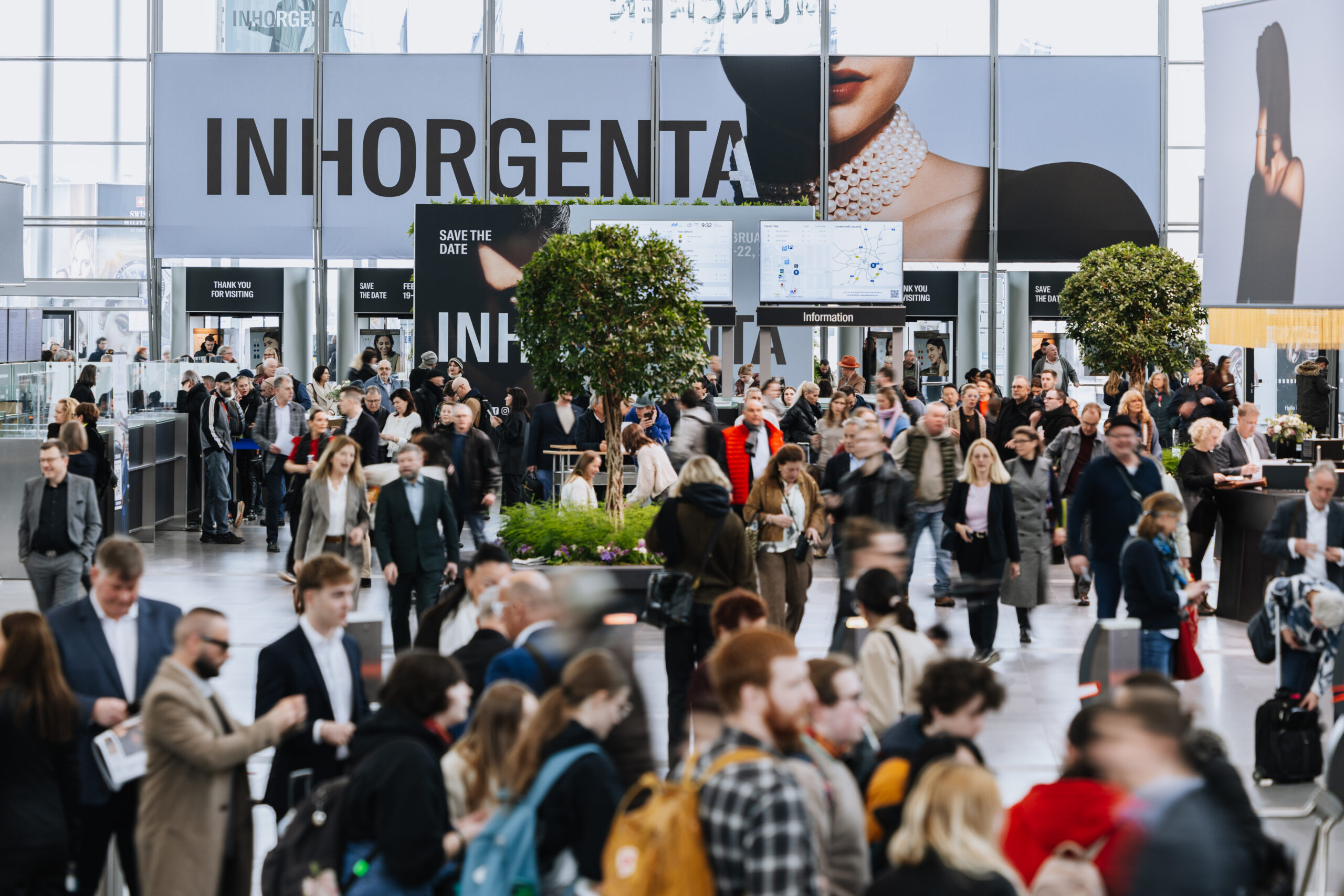


INHORGENTA MUNICH is one of Europe’s key trade fairs for jewelry, watches, and gemstones — and in 2026, it again made Munich the meeting place for buyers, brands, manufacturers, and suppliers. This year’s show ran from February 20 through the 23rd, with approximately 900 exhibitors representing 1,200 brands from 35 countries, and reportedly more than 25,000 trade visitors from 94 countries.
This show prides itself on craftsmanship and design. In addition, this year, INHORGENTA focused on the story of responsible supply chains.
Responsibility — Practical, Not Promotional
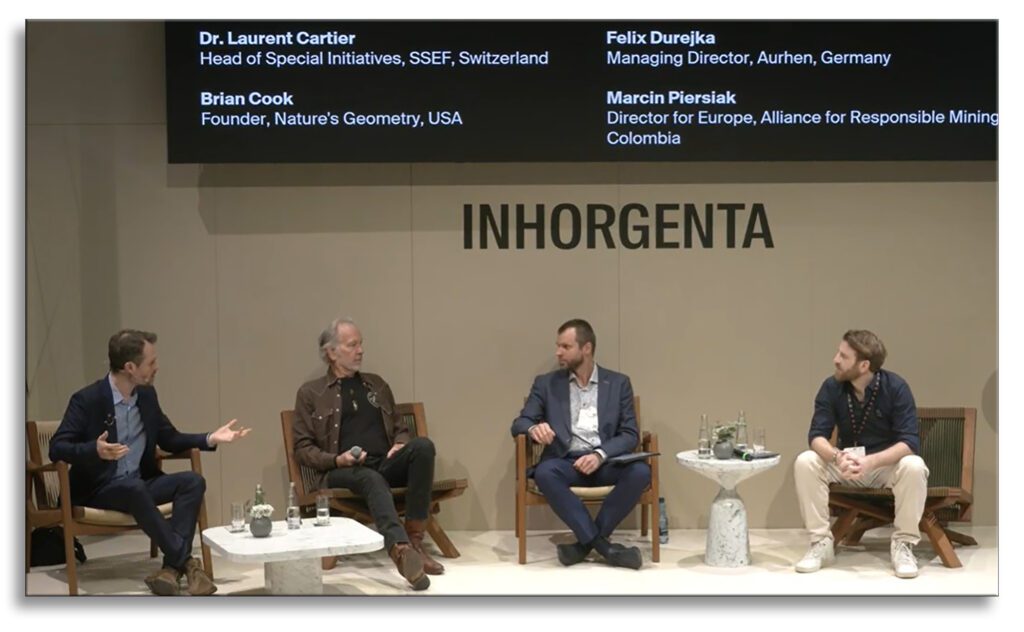
One of the best examples came from a panel at INHORGENTA’s TrendFactory program — the fair’s conference stage for industry discussions — curated with support from Dr. Laurent Cartier, Head of Special Initiatives at the Swiss Gemmological Institute SSEF.
Cartier framed the goal in plain language. Instead of speaking in broad generalities about responsibility, the panel would focus on “real insights from the ground.”
Who Spoke
The panel brought together three perspectives that trade-show audiences don’t always get to hear from in the same room, or at the same time:
Felix Durejka, representing AURHEN ecofair, a long-running model built around transparent mine-to-market relationships.
Brian Cook, owner of Nature’s Geometry, who many of us already know from Tucson and other trade events — but whose work is rooted in mining communities in Brazil.
Marcin Piersiak, from the Alliance for Responsible Mining / Fairmined side of the conversation, where standards and market mechanisms meet the messy on-the-ground world.
Brian Cook on the Language of Responsibility
Brian Cook, who has worked with gem mining communities in Brazil for decades, began with a simple observation about the language we use in the trade. As he explained, “I like that you use the term ‘responsible.’ … Responsible is simple,” and easy to understand.
“Downstream, responsible sourcing has like a checklist… a box that you check off —
▢ no child labor
▢ formalized operations
▢ no environmental harm.
But the reality back in the jungle… we’re dealing with communities facing social and economic survival, and it gets messy.”
That’s blunt. But it’s also what many people in the room already suspected — they just don’t always hear it said out loud.
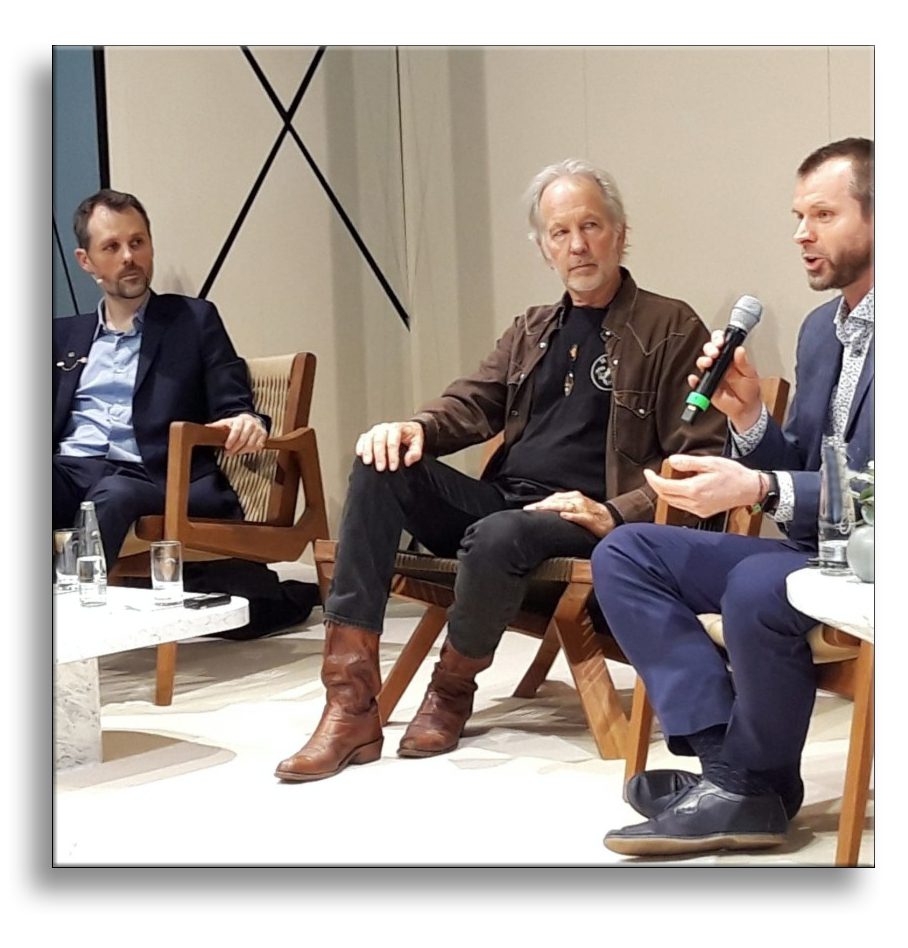
Marcin Piersiak: scale, standards, and uncomfortable trade-offs
Piersiak gave the panel its widest-angle lens. He said the reality of artisanal and small-scale mining lives between two extremes — the horrific stories and the overly romantic ones — because “the reality is somewhere in between.”
He also put scale on the table: estimates, he said, suggest more than 20 million people are involved in gold mining, and “apparently 80% of gemstone production comes from the ASM.” When you include families and the broader economic network, he said, “it’s like 100 million people.”
Then he asked the jeweler’s question directly: what is the responsible thing to do — face this reality and take steps to improve it, or pretend it doesn’t exist?
Later, he delivered a point that doesn’t get said often enough in public: sometimes the premium that miners receive can be “less than the cost of traceability,” and that creates an uncomfortable question for the trade — what matters most, and how do you scale solutions so they’re not only “right,” but workable?
He also returned to what may be the single most practical message for the market: this only grows if brands commit long-term. Otherwise, it stays a small, admirable niche.
If Piersiak widened the lens to show the scale of the challenge, Felix Durejka brought the discussion back to what that work actually looks like on the ground.
Felix Durejka: transparency first, then the work begins
“Transparency is kind of the base” for this work, noted Durejka. “First of all, you need a supply chain that is completely transparent.” Without that, you can’t even get to the mine level consistently.
He also pushed back on the idea that change happens quickly, or even slowly.
Transformation “will not happen within that generation directly,” he said. “It takes many, many years to develop.” His example was moving: after years of work, he described a case where a miner and a cutter were able to send their children to university. He called that “extraordinary,” precisely because mining often becomes generational — a miner’s son becomes a miner, and the cycle begins all over again.
Durejka also pointed to a pattern he has seen before: projects built on outside support can fall apart once that support disappears — leaving communities right back where they started.
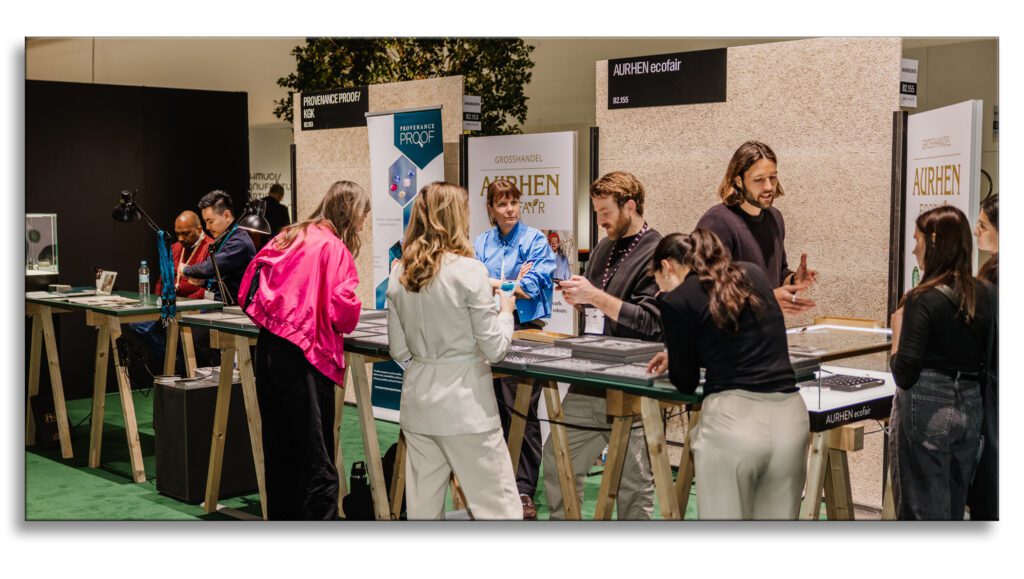
AURHEN ecofair — Building a Model Before It Was Trendy
Felix Durejka, who now leads the AURHEN ecofair initiative, was speaking from inside one of the industry’s longer-running attempts to build exactly the kind of transparent supply chain the panel had been discussing.
AURHEN ecofair traces its origins back to the early 1990s, when founder Jutta Werling-Durejka was working as a geographer in Bolivia researching mining contamination of freshwater systems.
By 1999, she had partnered with the Soares family in Minas Gerais, Brazil, to restructure a mine and cutting workshop under eco-fair criteria developed alongside Professor Hermann Wotruba of RWTH Aachen University. Certification followed in 2003.
Over the years, the portfolio expanded to include chemical-free river gold recovery in Germany, Fairtrade-certified gold from Peru, eco-fair Tahitian pearls from Kamoka in French Polynesia, and untreated Namibian gemstones mined and cut by a women’s cooperative. Leadership transitioned to Felix Durejka in 2022.
For the trade, this isn’t about slogans. It’s about whether you can point to a mine, a cutter, and a set of standards — and show how they connect. Documented origin and untreated goods may still represent a smaller slice of the overall market, but the questions from buyers are getting more specific.
And when those questions come, companies that have been documenting their supply chains for decades don’t have to scramble for answers. 👍
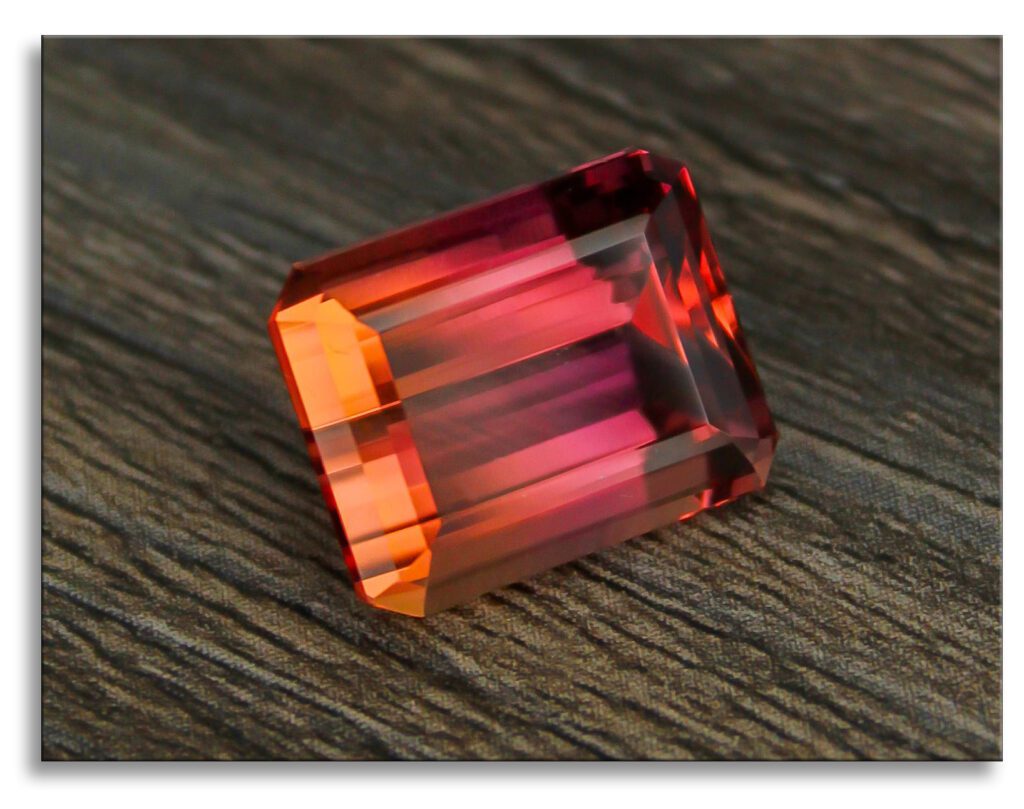
INHORGENTA Gemstone Design of the Year
The Awards — and a Loose Stone That Took the Spotlight
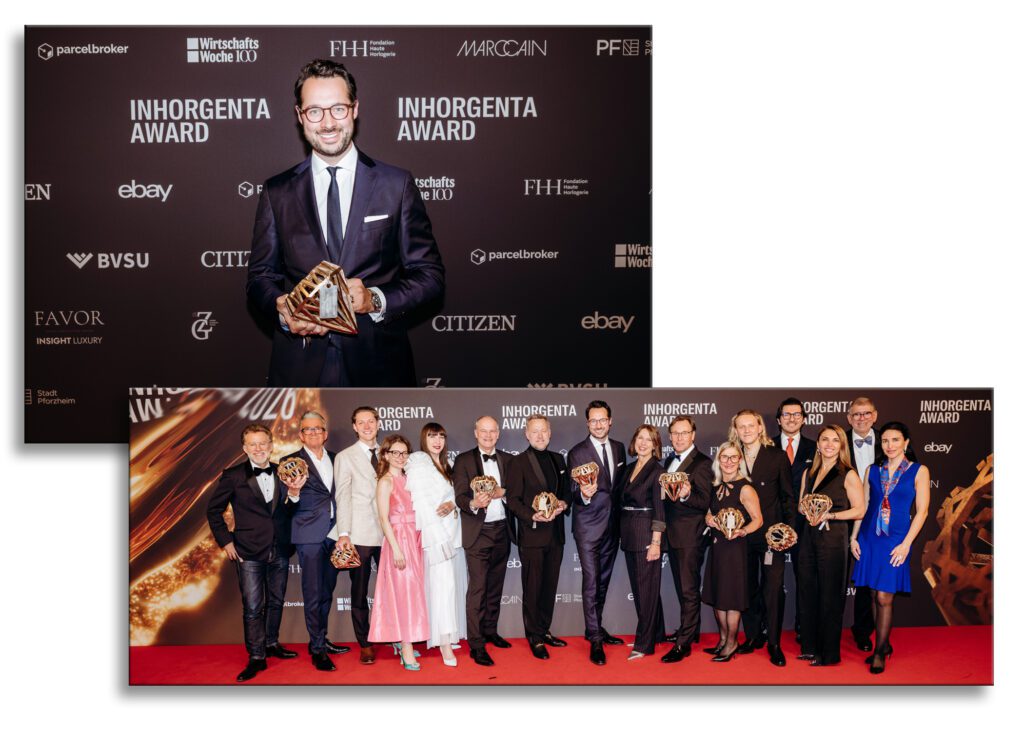
INHORGENTA’s award ceremony remains the show’s headline moment — staged at the Bavaria Filmstudios before more than 500 guests. The ninth edition set a record with 148 submissions from 19 countries, underscoring the award’s growing international reach.
Gemstone Design of the Year — Arnoldi International
Arnoldi International won Gemstone Design of the Year for a bicolor Imperial topaz — described by the jury as a nearly 13-carat stone with color intensity ranging from purplish rosé to vibrant orange and copper, “impressively highlighted through masterful cutting.”
Alexander Arnoldi told us that the submitted emerald cut is a 12.79-carat Imperial Topaz from Brazil, “distinguished by its exceptional color complexity, ranging from warm gold to delicate rosé tones,” combining “rare natural color, remarkable clarity, and a precise cut that enhances its depth and brilliance.”
Fine-quality topaz in this color range is extremely rare — and rarer still in this size. While Arnoldi refers to it as “Imperial,” there are those who might elevate it even further by quietly dropping the royal modifier altogether, simply calling it precious topaz and letting the stone speak for itself.
Arnoldi said the recognition “symbolizes our commitment to developing each gemstone with the highest level of care and expertise,” reflecting the daily work “from selecting the rough at origin to precision cutting and responsible market placement.”
We’ve recently seen that Arnoldi cutting discipline. In Tucson this year, a couple of Arnoldi peridot layouts stopped us in our tracks. (More on those next week.)
Gemstone Design of the Year – well deserved.
Other awards worth noting
High Jewelry of the Year went to Krisonia Alta Gioielleria, and Goldsmith Studio of the Year went to Ruth Sellack of Stuttgart.
High Jewelry of the Year
The award goes to Krisonia Alta Gioielleria for a white gold necklace set with numerous sapphires and diamonds. The jury recognized the piece as a masterpiece of harmonious proportions, embodying the highest aesthetic standards and exemplary execution of classic high jewelry.
Goldsmith Studio of the Year
The trophy goes to Ruth Sellack in Stuttgart. The jury praised the manufactory for its modern, distinctive signature, authentic design and consistently practiced craftsmanship. The works stand for clarity of design, precision and an appeal extending far beyond the region.
Tap here for more on INHORGENTA