This summer, Van Cleef & Arpels reminds us how “ordinary” gem materials can be transformed into extraordinary jewels. Lapis lazuli. Turquoise. Coral. Black onyx. Malachite. Chrysoprase. Sometimes the magic isn’t in the gem material. It’s in what designers, lapidaries, craftspeople, and setters do with it!
None of these materials are amongst the world’s rarest or most expensive gems. Yet in the hands of Van Cleef & Arpels, they become Egyptian goddesses, hieroglyphs, winged scarabs, temple columns, and royal collars—transformed into High Jewelry through imagination, craftsmanship, and extraordinary design.
The legacy is on display, complementing each other, in two separate venues. In Paris, Van Cleef & Arpels unveiled Fascinating Egypt, its 2026 High Jewelry collection, offering a contemporary interpretation of Egyptian Revival. At the same time, Vienna’s MAK – Museum of Applied Arts is presenting GLANZSTÜCKE: Van Cleef & Arpels High Jewelry × Masterpieces from the MAK Collection, a major exhibition showcasing more than 300 historic jewels from the company’s own collection. (June 10 – September 27, 2026) Many of the jewels on display at the MAK have been reacquired by Van Cleef & Arpels over the years, preserving its design history and giving visitors the rare opportunity to see masterpieces that would otherwise have remained in private hands.
The MAK exhibition looks back at some of the jewels that defined Van Cleef & Arpels during the twentieth century. Van Cleef & Arpels’ High Jewelry collection, Fascinating Egypt, shows that those ideas continue to inspire the maison today.
Gary Roskin
Roskin Gem News Report
Egypt Then…
Van Cleef & Arpels embraced Egyptian Revival early in the Art Deco period, drawing inspiration from one of the twentieth century’s most influential design movements. As for influential, few archaeological discoveries have influenced jewelry design as profoundly as the opening of Tutankhamun’s tomb in 1922. As Egyptian motifs swept through Europe during the Art Deco period, Van Cleef & Arpels embraced the movement with jewels inspired by temple architecture, lotus blossoms, winged forms, scarabs, hieroglyphs, and the bold color combinations associated with ancient Egypt.
The maison’s designers combined lapis lazuli, turquoise, coral, onyx, emerald, ruby, sapphire, and diamonds into compositions that captured the spirit of Egyptian art without merely copying ancient objects.
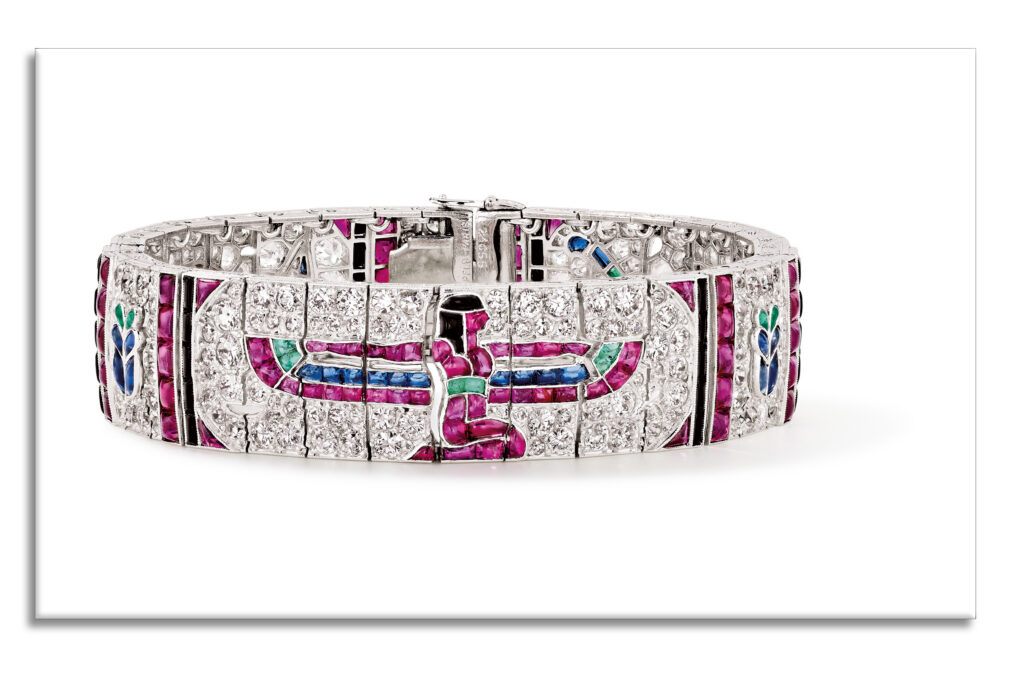
Emerald, Ruby, Sapphire, Diamonds, Black Onyx, in platinum.
A few of those historic Egyptian-inspired creations are included in the MAK exhibition, providing an elegant bridge to the maison’s newest interpretation of the theme.
…and Egypt Now
The Fascinating Egypt collection continues that conversation a century later.
Rather than reproducing archaeological treasures, the new collection interprets ancient Egypt through a distinctly modern lens. Hieroglyphs become wearable messages. Temple columns become earrings. Winged deities evolve into Mystery Set brooches. Ancient architecture inspires contemporary necklaces and bracelets built around extraordinary gemstones.
The result is unmistakably Van Cleef & Arpels—respectful of history while never becoming historical.
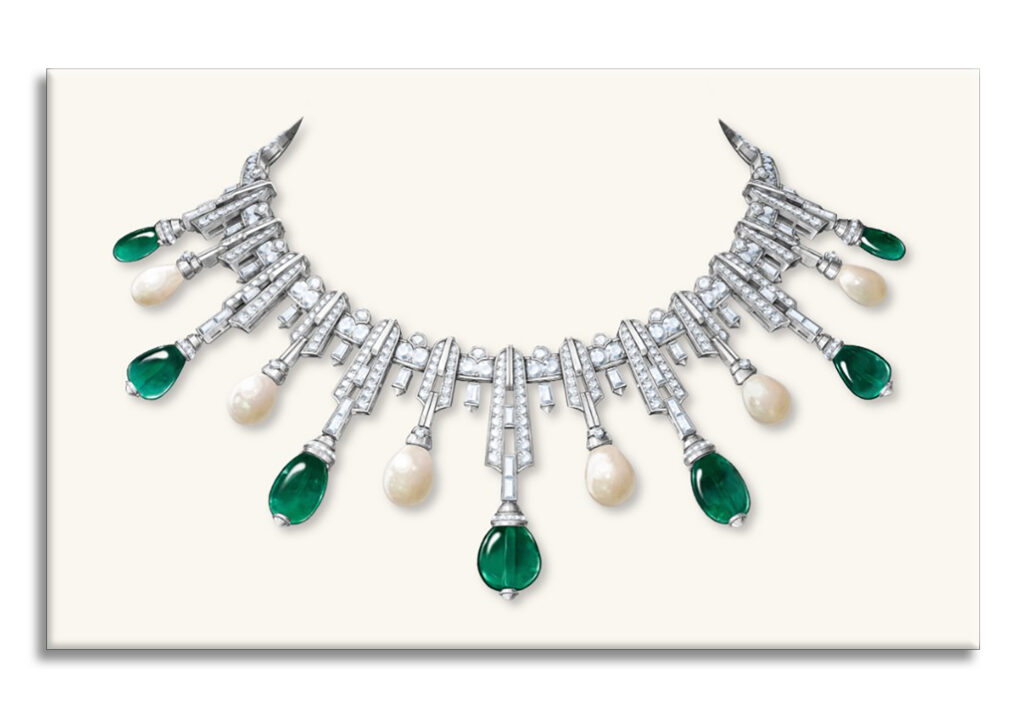
10 Colombian Emeralds drops, 107.37 ctw.
7 Natural Pearls, 84.94 ctw.
and Diamonds
Set in Platinum and White Gold
Amongst the collection’s highlights, here is a celebrated 1929 necklace created for Princess Faiza of Egypt, pairing Colombian emerald drops with natural pearls in an unmistakably Art Deco silhouette.
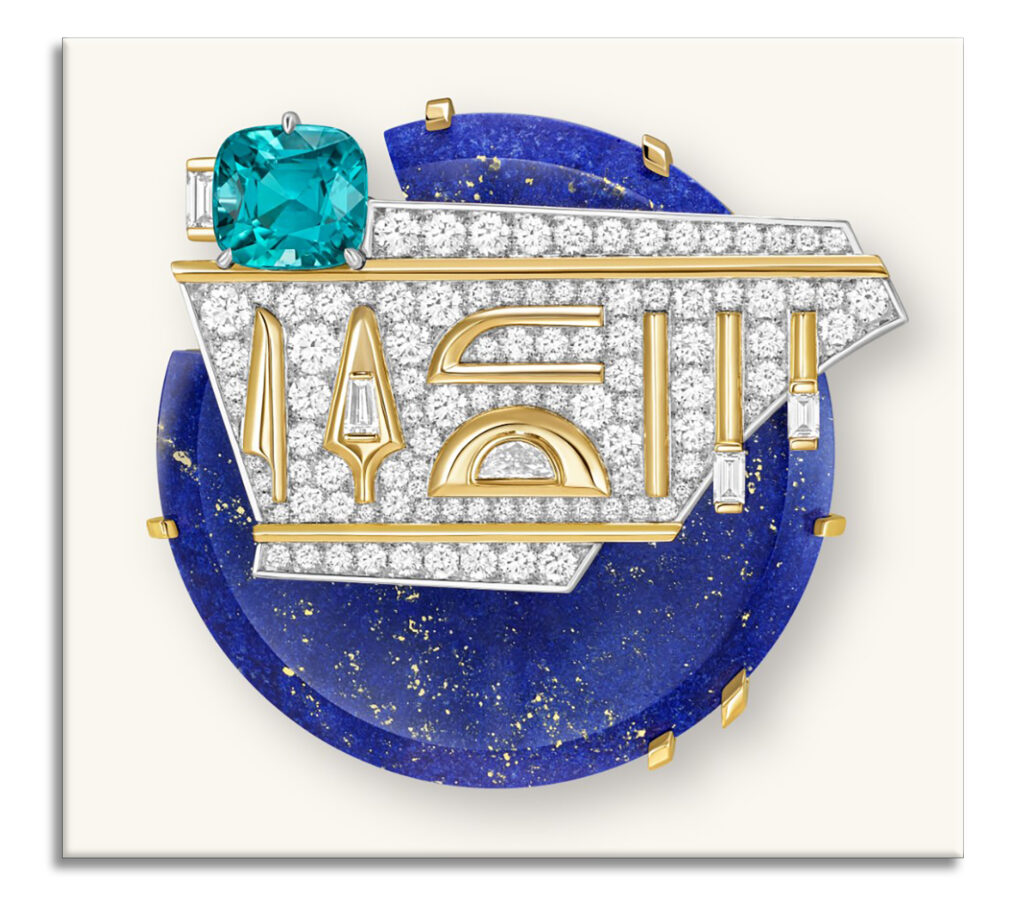
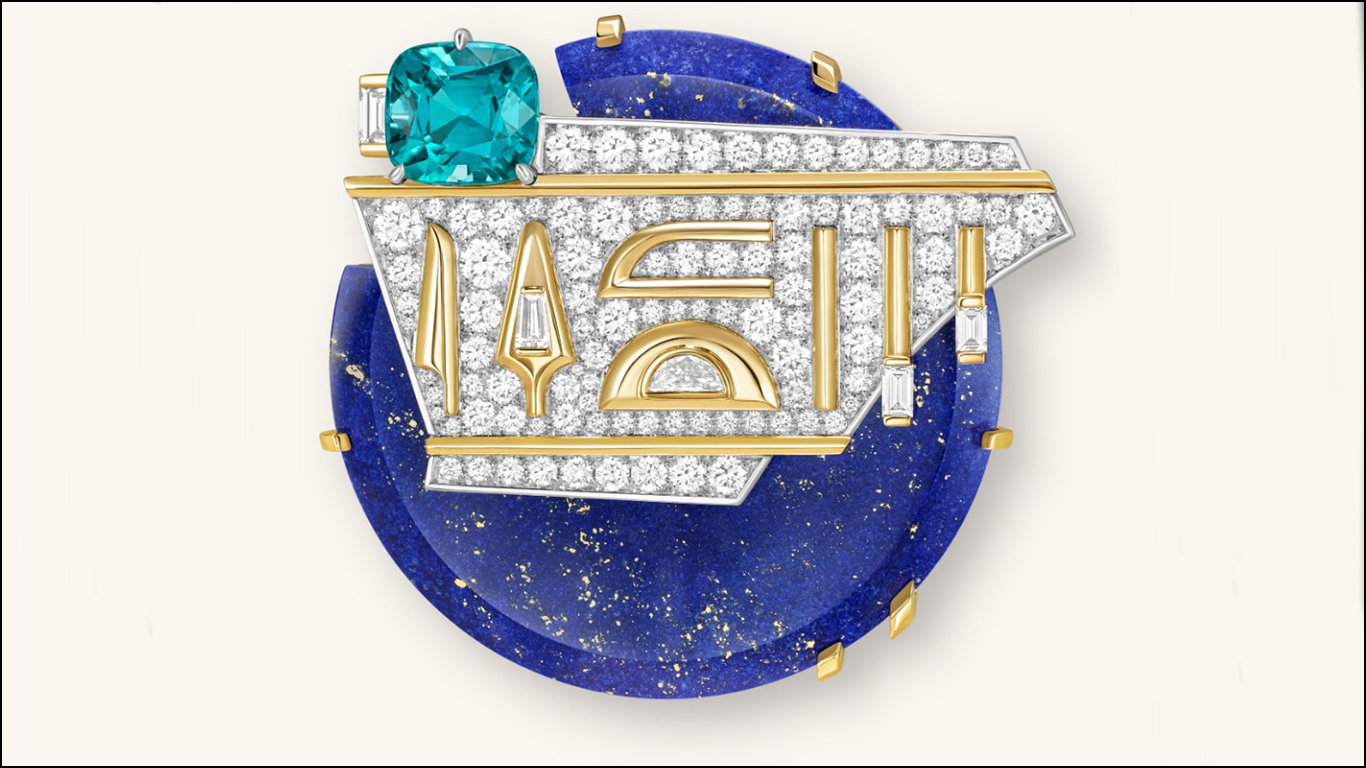
Lapis, Diamonds, with a 5.82 cts. Namibian Indicolite Tourmaline
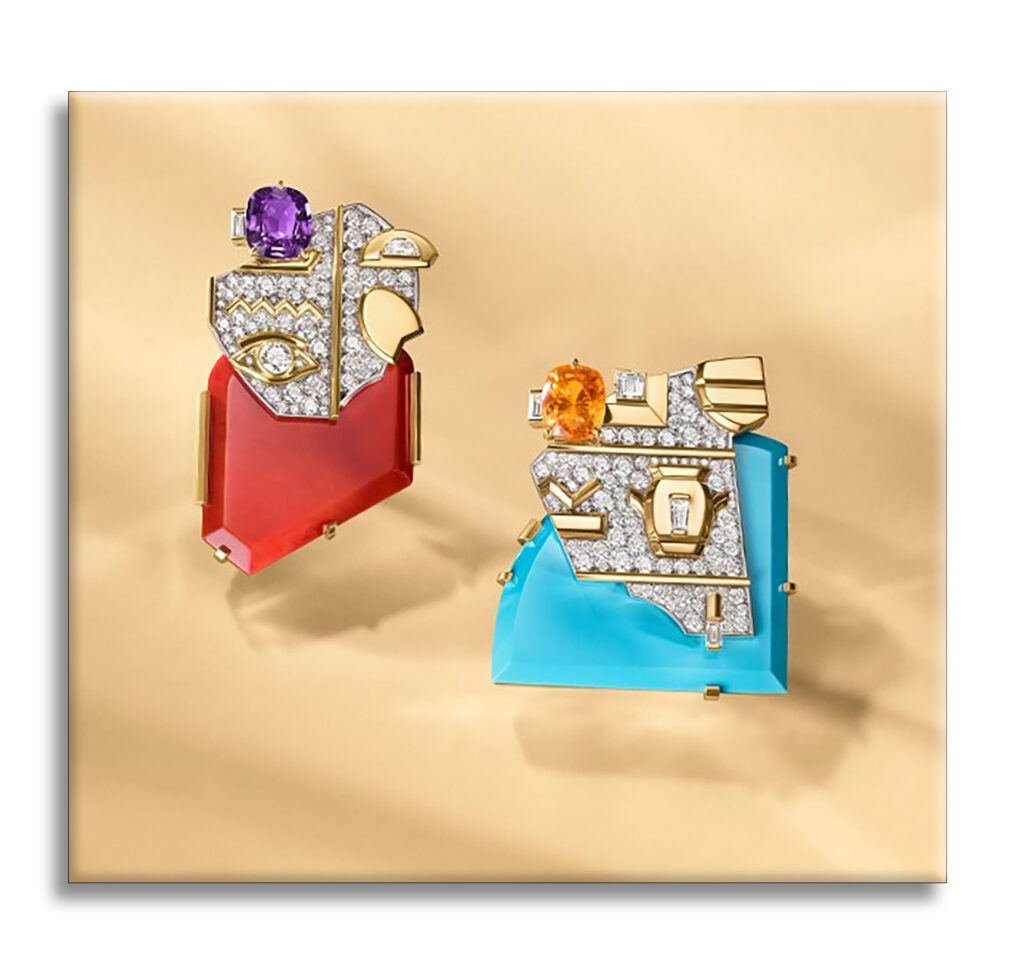
Coral, Diamonds, with 5.51 cts. Sapphire
Turquoise, Diamonds, with 7.93 cts. Spessartite Garnet.
Among the most intriguing creations are a series of hieroglyphic brooches that literally spell words in ancient Egyptian writing. Backgrounds of lapis lazuli, turquoise, and coral are accented by gemstones including indicolite tourmaline, spessartite garnet, sapphires, and diamonds—transforming one of history’s oldest written languages into contemporary High Jewelry.
The turquoise, lapis, and gold palette immediately recalls colors long associated with Egyptian jewelry.
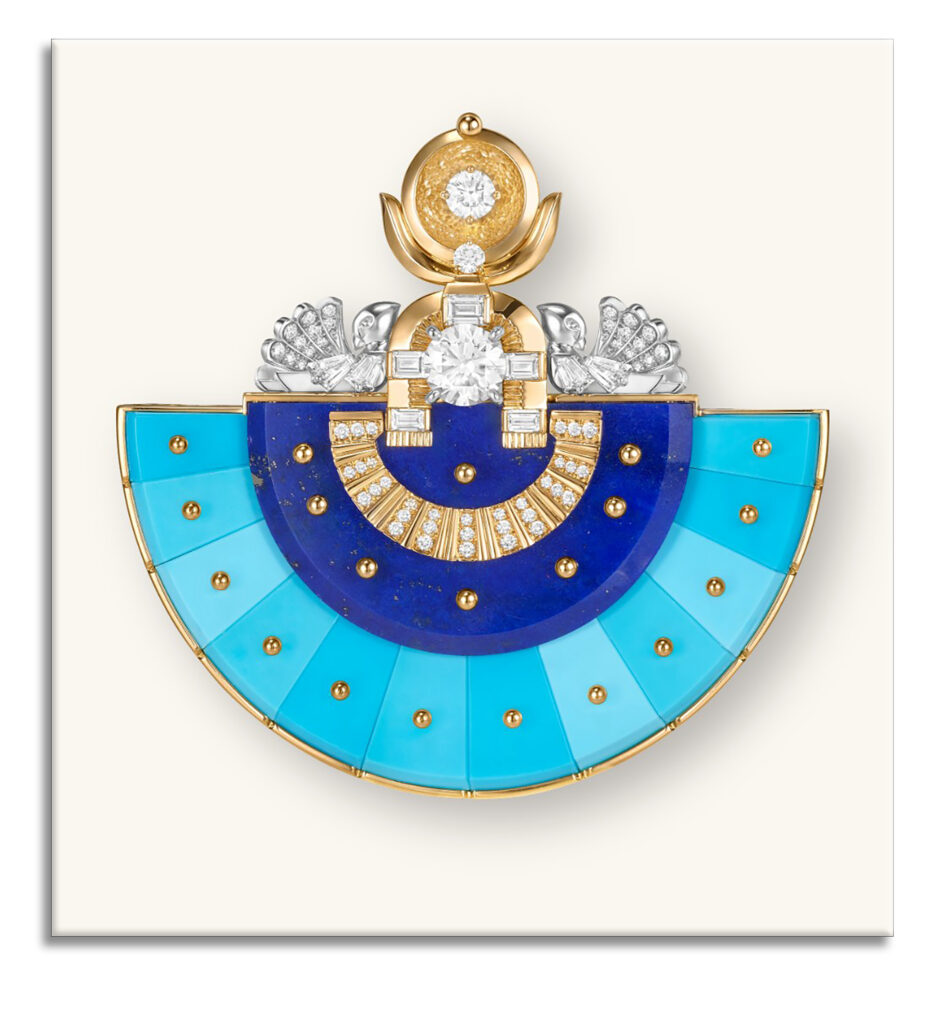
whose symbolic importance extends from ancient Egypt to the present day.”
Light, Medium, & Dark Blue Turquoise, Lapis, Diamonds and Gold.
Center diamond: Round Brilliant, 1.51 cts., D/VVS1.
Early 1900s Van Cleef & Arpels on Display at the MAK
Beyond Egypt
The MAK exhibition makes clear that Egyptian Revival is only one chapter in Van Cleef & Arpels’ remarkable design history.
Its galleries explore themes including Architecture, Wanderlust, Rhythmic Designs, On Stage, Metamorphoses, and Nature & Cosmos, revealing how travel, performance, innovation, nature, and the decorative arts have continually inspired the maison’s jewelers.
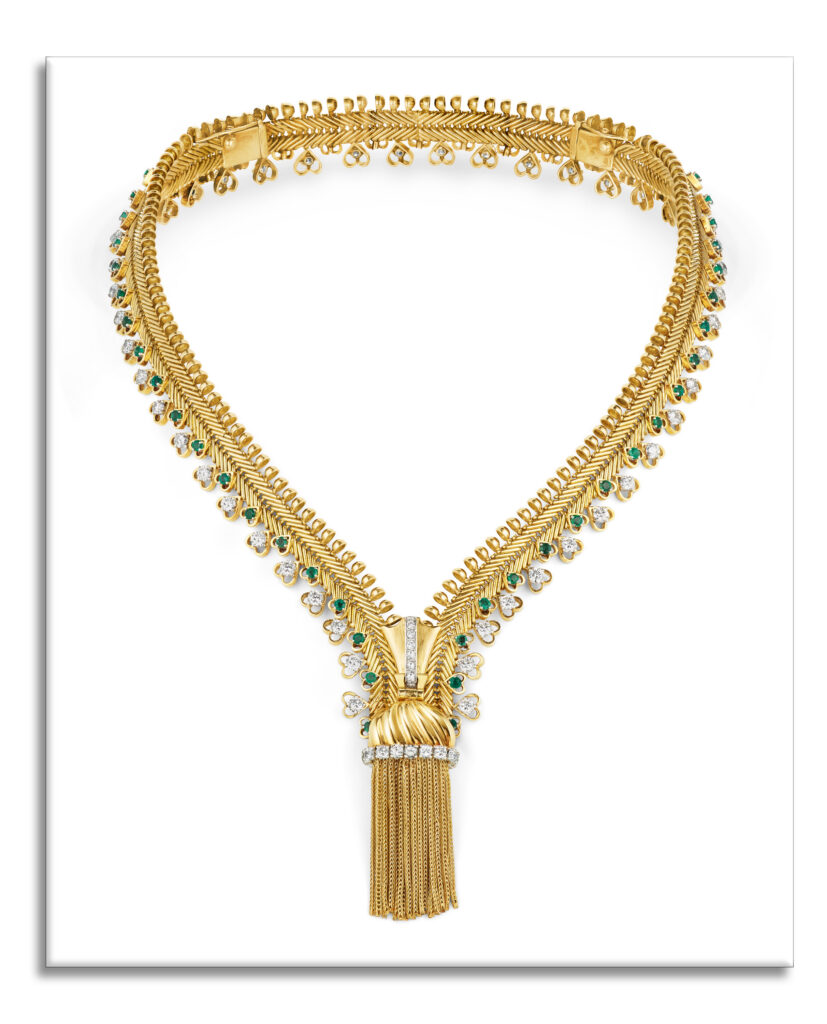
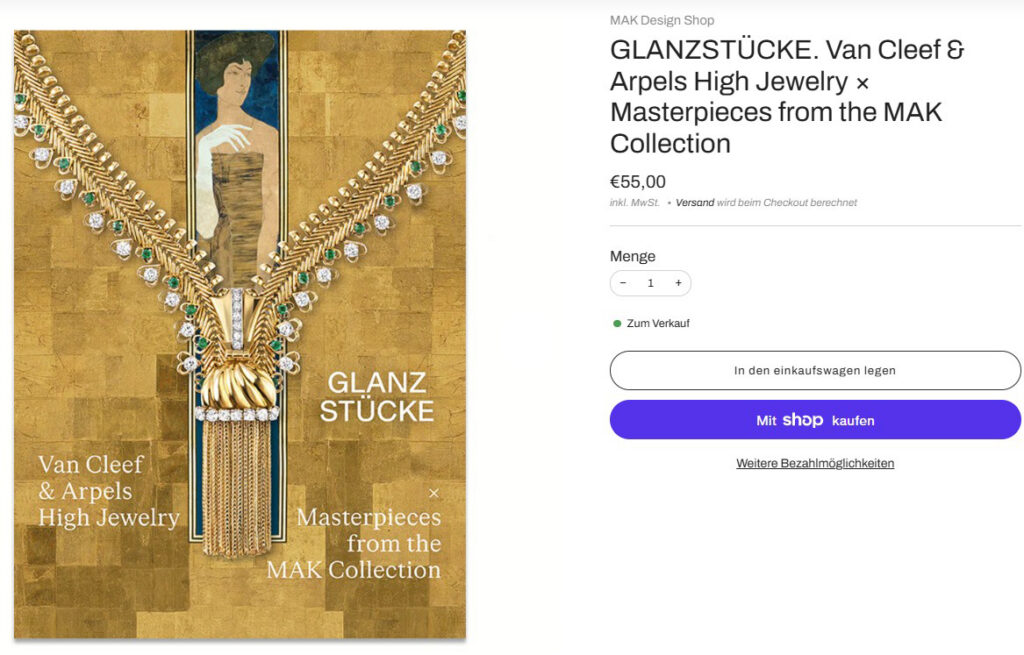
The legendary Zip necklace, inspired by an ordinary zipper
transformed into an ingenious piece of transformable jewelry, remains one of the exhibition’s most recognizable masterpieces.
Originally suggested by the Duchess of Windsor, the Zip necklace remains one of Van Cleef & Arpels’ most ingenious transformable creations.
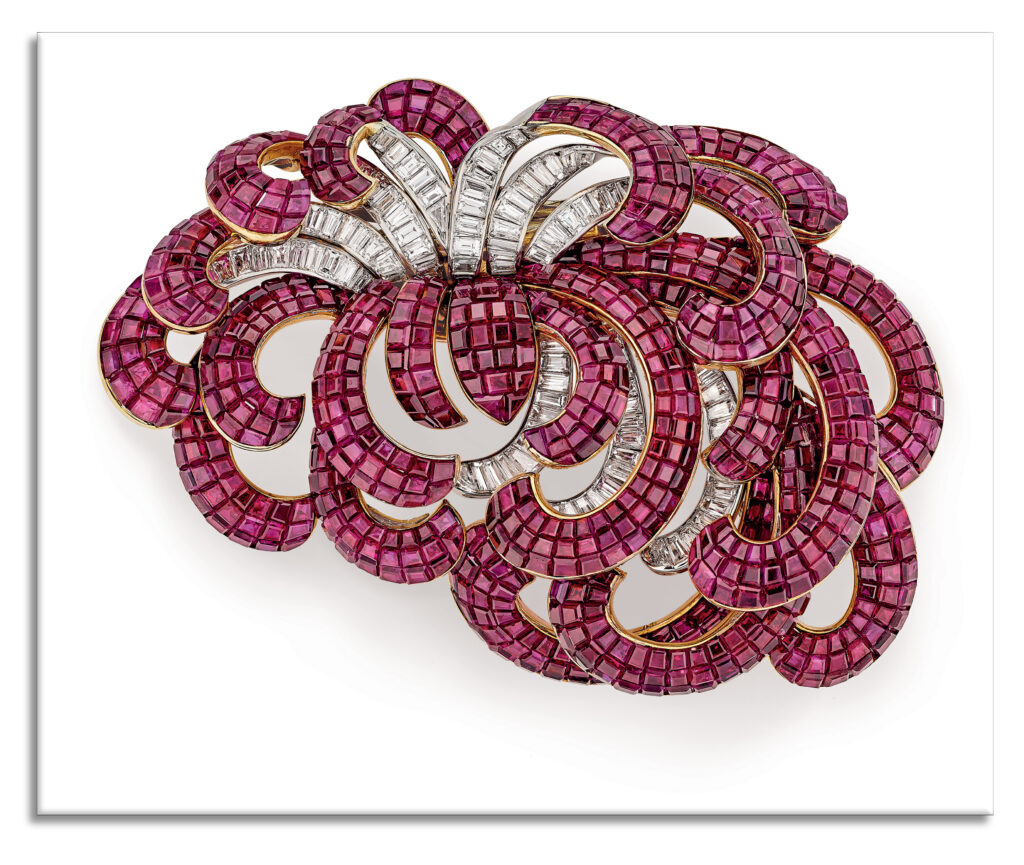
Chrysanthemum clip. circa 1937
Rubies and Diamonds.
The exhibition also celebrates Van Cleef & Arpels’ celebrated Mystery Setting, one of the jewelry world’s most technically demanding gem-setting techniques, allowing rubies, sapphires, and emeralds to appear as uninterrupted fields of color without visible prongs.
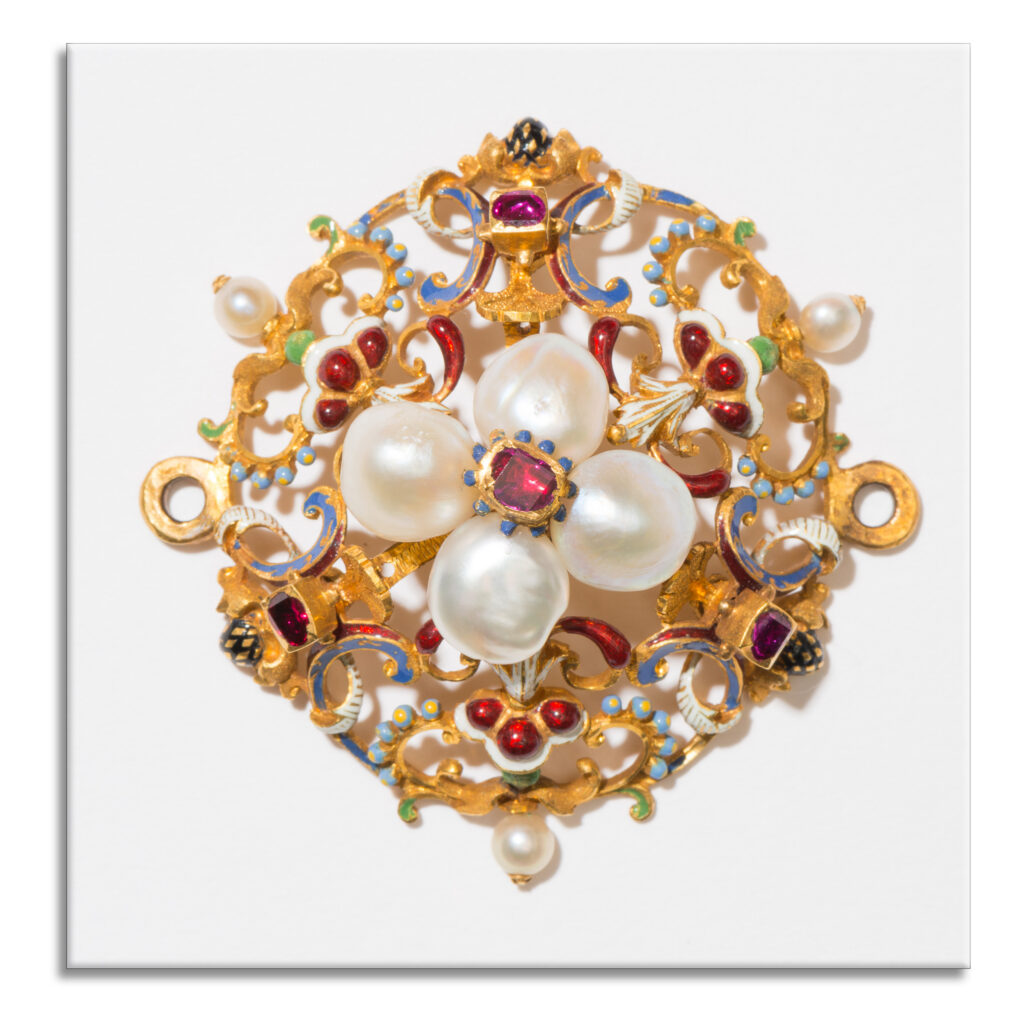
Rosette from the “Hall Jewelry,” c. 1580
Munich Court Workshop
Gold, enamel, rubies, and natural pearls.
Displayed in the MAK exhibition’s Metamorphoses gallery,
where Renaissance jewelry is paired with twentieth-century Van Cleef & Arpels creations
to explore changing ideas of design and craftsmanship across the centuries.
Throughout the exhibition, historic jewels are displayed alongside furniture, glass, textiles, and decorative arts from the MAK’s collections, underscoring a central theme: great jewelry rarely develops in isolation. It evolves alongside architecture, fashion, craftsmanship, and the broader artistic movements of its time.
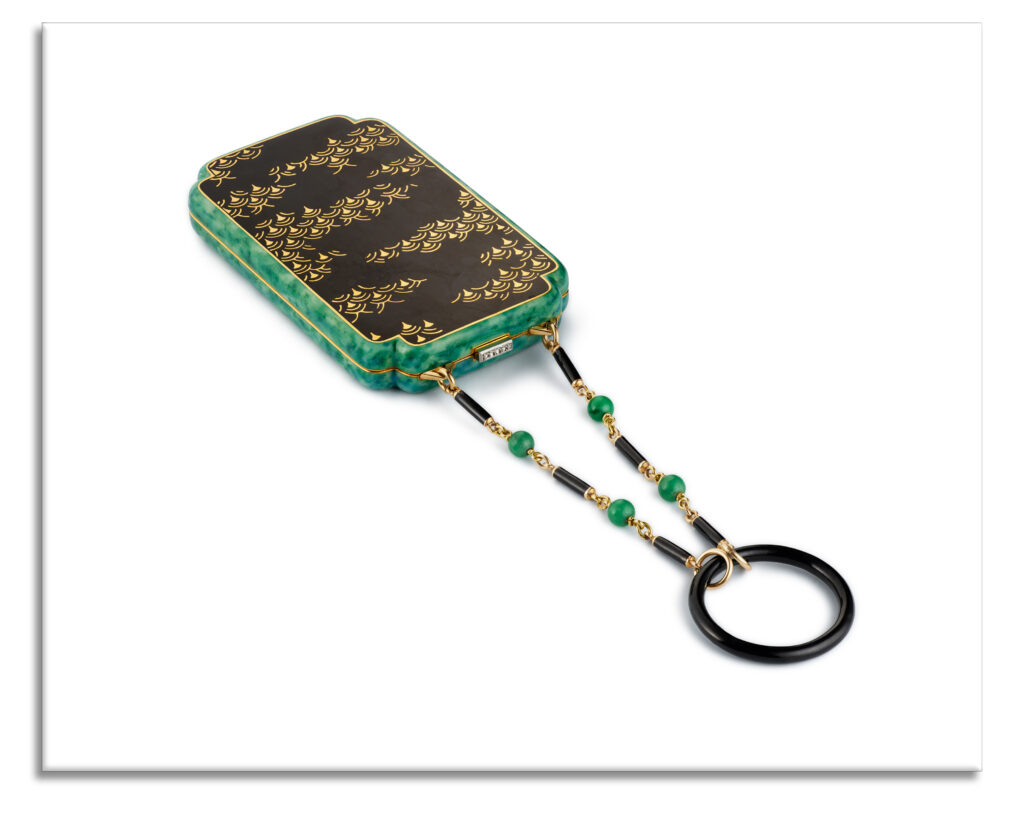
Yellow gold, jade, enamel, and diamonds
Van Cleef & Arpels Collection
Like its Egyptian-inspired jewels of the same era, Van Cleef & Arpels also looked eastward to Japan for inspiration, adapting the clean lines, lacquer-like decoration, and restrained color palette of Japanese decorative arts into elegant personal accessories, such as this elegant vanity case.
A Century of Inspiration
Whether viewed through the newly created jewels of Fascinating Egypt or the historic masterpieces assembled at Vienna’s MAK Museum, Van Cleef & Arpels reminds us that inspiration has no expiration date. Ancient Egypt captivated jewelry designers a century ago, and it continues to inspire them today.
Tap here to visit the MAK Museum in Vienna.
Accompanying the exhibition *GLANZSTÜCKE: Van Cleef & Arpels High Jewelry × Masterpieces from the MAK Collection* is a publication of the same name, edited by Lilli Hollein, featuring texts by Lilli Hollein, Catherine Renier, Alexandrine Maviel-Sonet, Rainald Franz, Sebastian Hackenschmidt, Michael Hölters, Kathrin Pokorny-Nagel, Anne-Katrin Rossberg, Lara Steinhäußer, and Mio Wakita-Elis; designed by Bueronardin. German/English, 368 pages with numerous color illustrations, 220 × 300 mm MAK, Vienna / Hannibal Books, Veurne, Belgium, 2026.