In our world, when someone says gold, silver, or platinum, we instinctively ask:
What karat? What fineness? What weight?
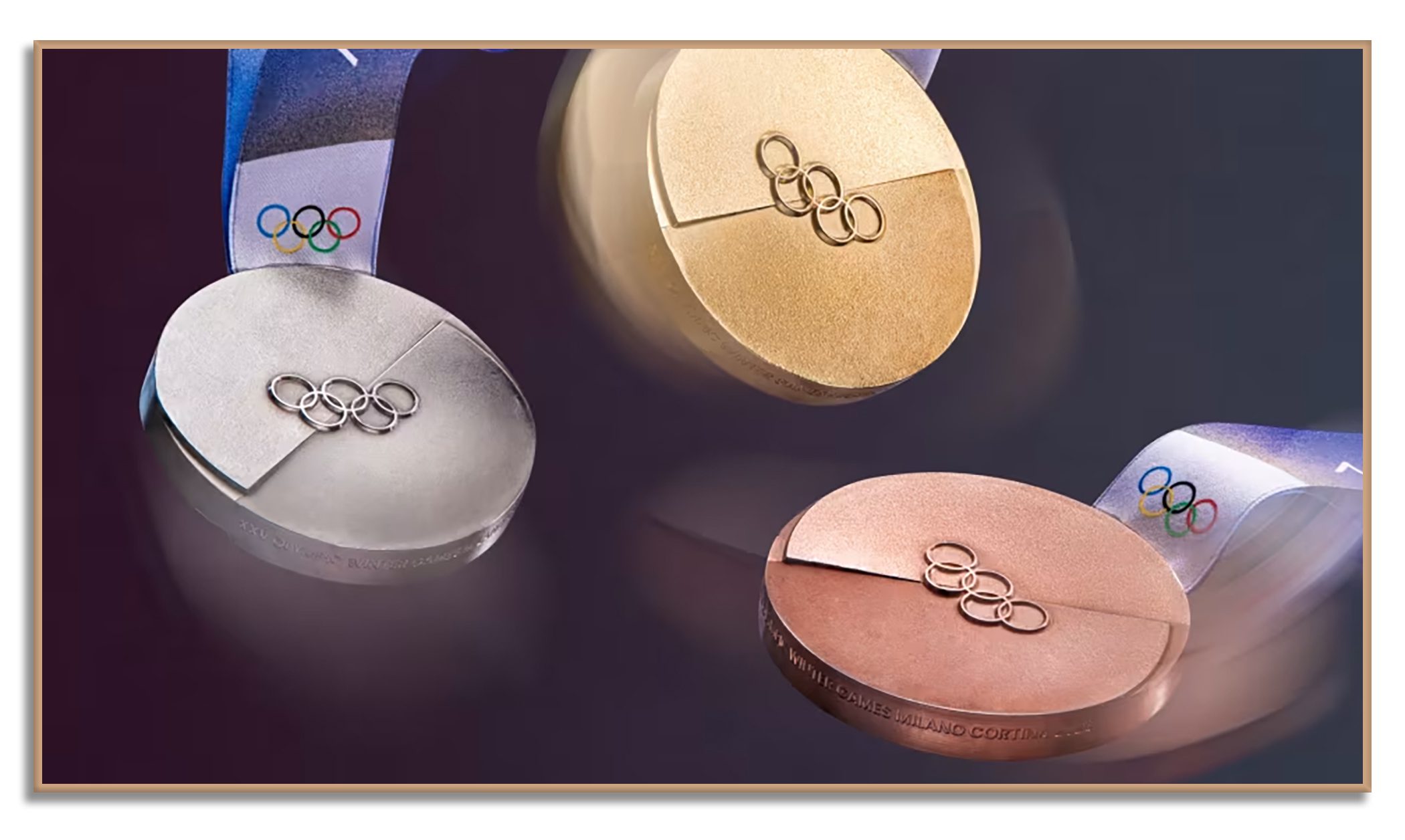
In another world — the Olympic world — when they say gold, silver, and bronze, they’re not talking precious metal. They’re talking precious medal.
But the composition of a “gold” medal might surprise a few jewelers in the room. Because Olympic gold medals are not solid gold — even if every winner still gives it the traditional bite.
In fact, Olympic gold medals haven’t been solid gold for more than a century.
The Metal Behind the Medal
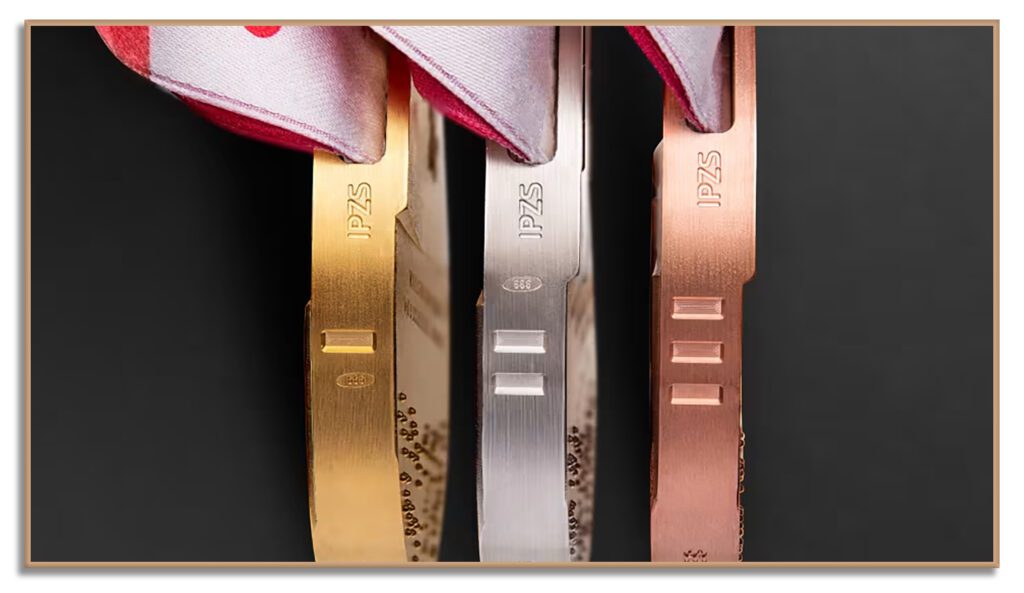
At the Milan–Cortina 2026 Winter Olympics, medals were produced by the Italian State Mint using recycled metals with a renewable-energy processes — a modern touch that would make any responsible refiner nod with approval.
The Olympic site lays it out clearly — and in terms any bench jeweler will appreciate.
There are a total of 1,146 medals to be awarded across the Olympic and Paralympic Winter Games:
- 245 gold, 245 silver, and 245 bronze medals at the Olympic Winter Games
- 137 gold, 137 silver, and 137 bronze medals at the Paralympic Winter Games
Every medal shares the same specs:
- Diameter: 80 mm
- Thickness: 10 mm
That’s a substantial piece of metal. This isn’t a charm. It’s closer to a paperweight.
Composition (Now We’re Talking)
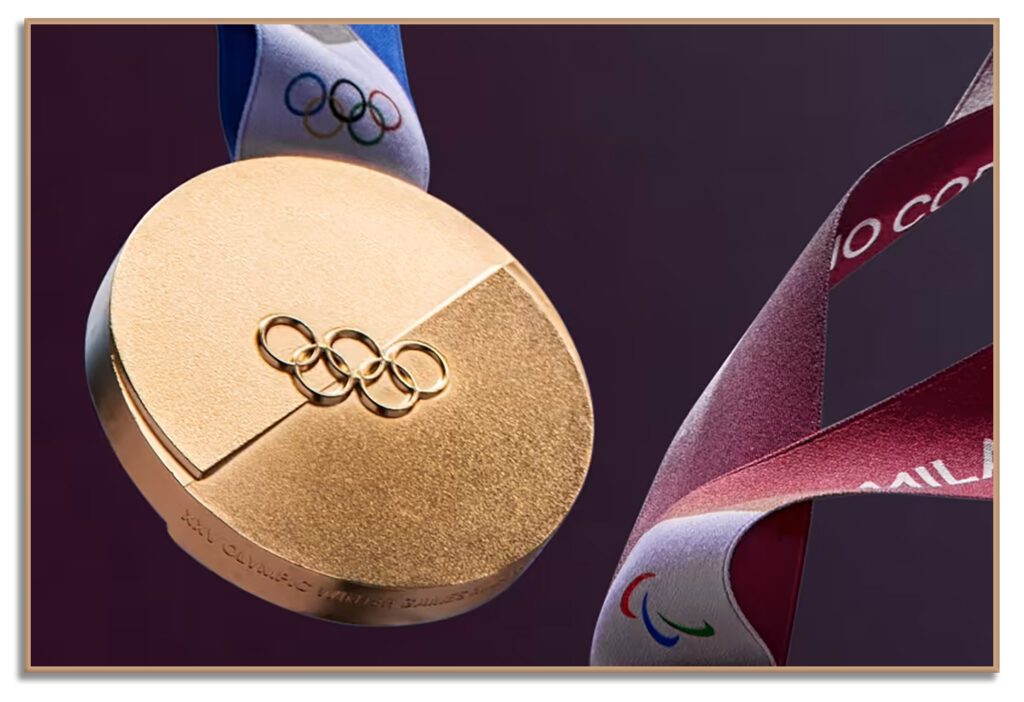
Gold Medal
Metal: 999 silver + 999.9 gold
Weight: 500 grams of silver + 6 grams of gold
Yes — that’s fine silver. And the plating? Essentially 24-karat gold.
So the “gold” medal is a half-kilo of fine silver, dressed in six grams of nearly pure gold.
Silver Medal
Metal: 999 silver
Weight: 500 grams
Again — fine silver. Not sterling. Not 925. Pure 999.
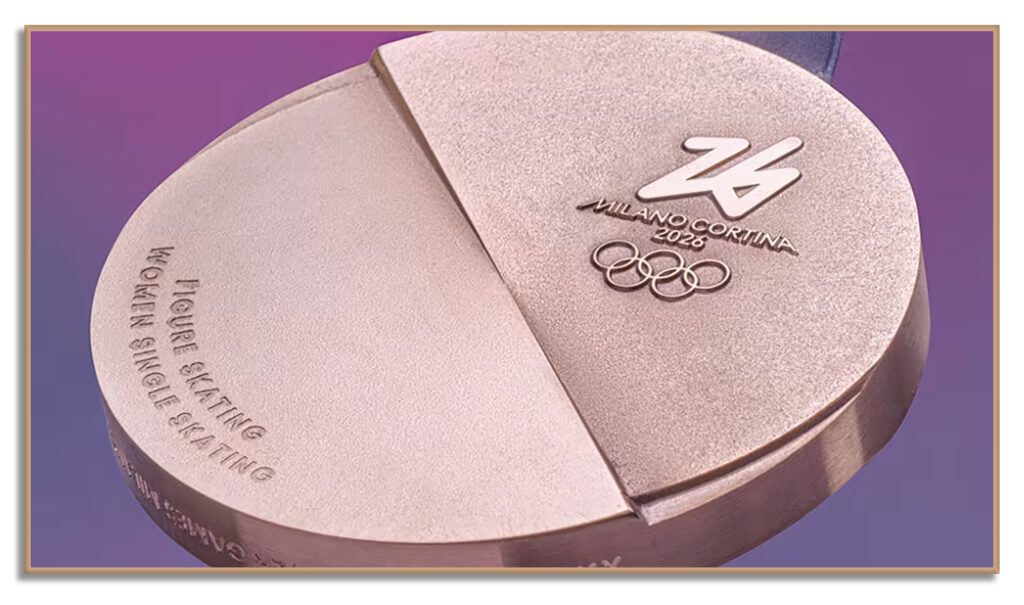
Bronze Medal
Metal: Copper
Weight: 420 grams
No mystery alloy there. Just copper — solid, substantial, and unapologetic.
Melt Value vs. Meaning
Thanks to elevated precious metal prices, both CNN and Town & Country report that these are the most materially valuable Olympic medals in history.
Of course, no athlete stands on the podium thinking about the scrap value of their Olympic medal. And as any jeweler knows, intrinsic value and emotional value rarely match.
A signed Cartier bracelet is worth more than its weight in gold.
An Olympic medal is worth more than its weight in history.
A Little History — When Gold Was Actually Gold
The last truly solid gold medals were awarded at the 1912 Summer Olympics in Stockholm.
Before that, things were even more interesting:
- At the 1896 Summer Olympics, first-place winners received silver medals.
- At the 1900 Summer Olympics, first-place medals were largely gilt silver — silver with a gold finish.
So in truth, Olympic “gold” has often been more about color than content.
Precious — Just Not for the Reasons We Usually Think
In the jewelry trade, we measure value in grams, karats, ounces, fineness, spot prices.
In the Olympic world, they measure value in hundredths of a second.
Six grams of gold may not sound impressive to a bench jeweler. But to the athlete who earns it, it’s priceless.
For a deeper dive into the numbers and the record-setting material value of this year’s medals, both CNN and Town & Country have detailed write-ups worth reading.
And if nothing else, it’s a good reminder: Sometimes what makes something precious isn’t the alloy. It’s the achievement.