
GemGuide has updated its Old European-cut diamond prices, decreasing them across all sizes. The revised prices are available now in the GemGuide Pricing App and will also appear in the September/October digital flipbook and print edition of the GemGuide.
According to Gemworld International, the availability of authentic Old European-cut diamonds is much smaller than when GemGuide first began pricing the category. At the same time, demand from the antique jewelry market remains very good.
As a result, subscribers may encounter asking prices outside the published ranges.
For a period of time, exceptionally strong demand pushed Old European-cut diamonds to very high premiums. While demand remains healthy today, those premiums have eased from their peak.
Gary Roskin
Roskin Gem News Report
A Specialized Market
Robertson emphasized that the revised prices should not be interpreted as a weakening market. Rather, they reflect a market that has stabilized. The exceptional premiums that developed over the past several years have eased back to levels that both buyers and sellers now view as sustainable.
“It’s a very specialized market. The premiums have adjusted off their peak to where buyers and sellers are now comfortable with today’s market. It’s not a surprise. We had been watching these adjustments for some time and felt it was the right time to revise that section of the guide.”
In fact, Robertson says, “Some authentic Old Europeans—even in tinted colors—are selling at prices equal to or above those of comparable modern round brilliants.”
He says that’s because today’s antique diamond market has evolved well beyond the traditional pricing formulas once used to compare Old European cuts with modern round brilliants.
Average Make
According to GemGuide, the published Old European prices are based on average makes. Stones with Very Good or Excellent polish and/or symmetry may trade at higher prices, while those with Fair/Fair or Fair/Poor finish—or with a culet that reflects prominently throughout the crown to the unaided eye—may be discounted.
Another important consideration is authenticity.
GemGuide notes that some diamonds fashioned in the Old European style are actually modern stones cut to resemble antique diamonds. These are most commonly encountered in higher color and clarity grades and may trade at prices outside the published ranges.
New vs. Old
Robertson says the distinction between authentic antique diamonds and modern reproductions has become increasingly important as the market has matured.
“Dealers watch for newly cut Old Europeans that are simply too well cut to be authentic period stones. They won’t pay the same price for those stones,” notes Robertson.
For many buyers and collectors, historical authenticity has become an important part of the value equation.
“People have come to recognize that there’s another value determinant beyond cut quality, color, and clarity: the position these old cuts hold in jewelry history.”
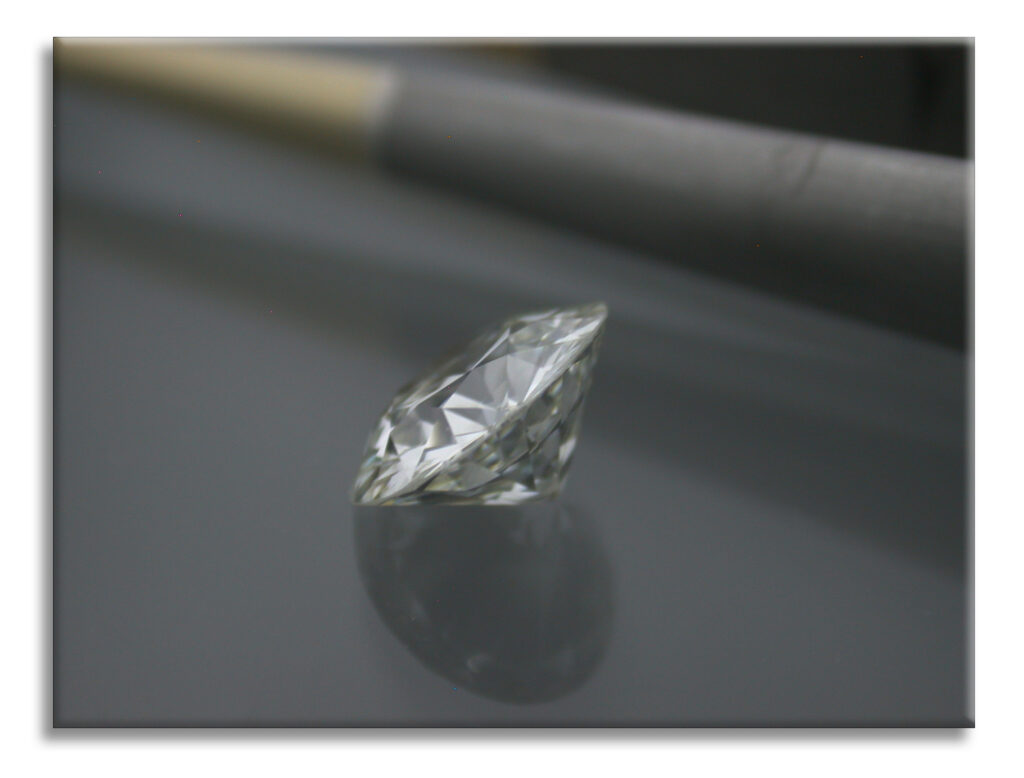
What About Old Mine Cuts?
One category you won’t find in GemGuide’s pricing charts is Old Mine-cut diamonds.
While Old European cuts already present pricing challenges because of their limited availability, Robertson says the Old Mine category is even more difficult. “The population of Old Mine-cut diamonds is simply too small to establish a meaningful pricing relationship.”
The Final Word
Ultimately, GemGuide’s pricing revisions reflect a market that has become increasingly specialized—one where authenticity and history have become part of the value equation.
As Robertson pointed out, “The days of automatically discounting Old Europeans against modern round brilliants are long gone.”