
Held live online on January 8, London’s Furlong Auction House presented a wide-ranging Collectables & Memorabilia Sale, 262 lots total, of which many included global diamond-trade artefacts, as well as from sports, and other cultural events.
The auction first came to our attention through the January 18 edition of the International Diamond Manufacturers Association’s Weekly Internet News Collection (WINC), which highlighted the sale. This sale is certainly well worth close attention, and firmly places Furlong Auction House on our radar for future gem-related offerings.
A Diamond in the Rough – With “Cape” Colour
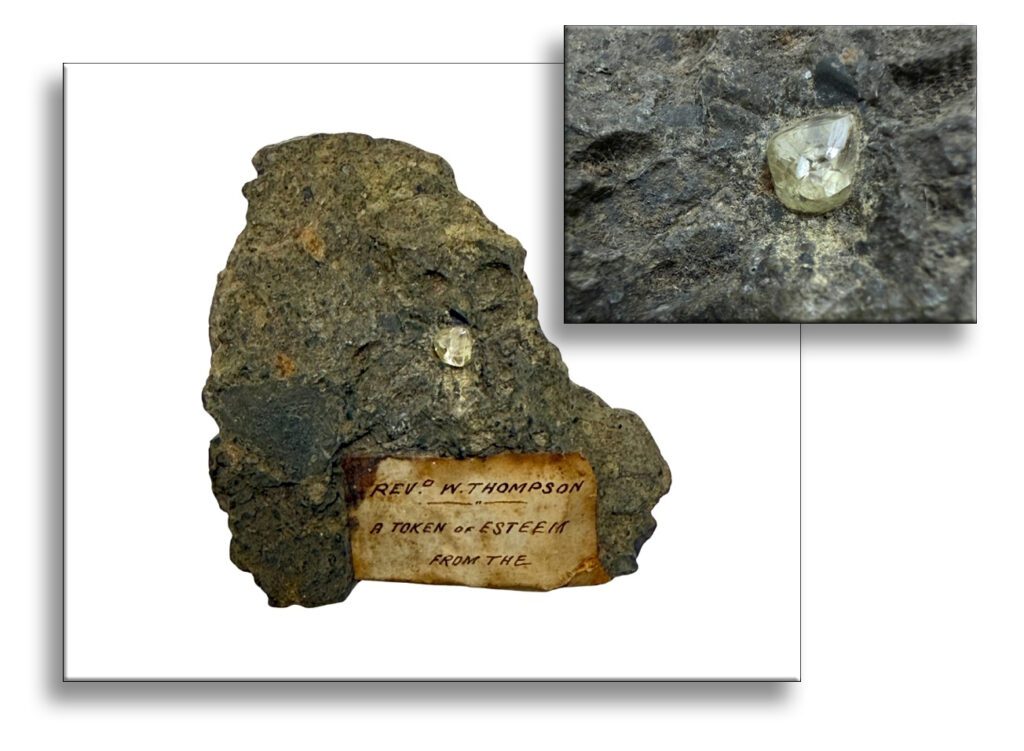
At the center of the jewellery section was Lot #65, an extremely rare 19th-century De Beers “New Rush” kimberlite specimen dated May 23, 1873. Originating from New Rush—the early settlement that later became Kimberley—the specimen contained a visible rough natural diamond crystal embedded in its original host matrix and retained its handwritten label. The piece is directly tied to the early years of the South African diamond rush, and the early history of De Beers.
Surviving labelled geological specimens from this time-period are exceptionally scarce, and examples retaining a visible diamond crystal are rarely encountered outside museum collections.
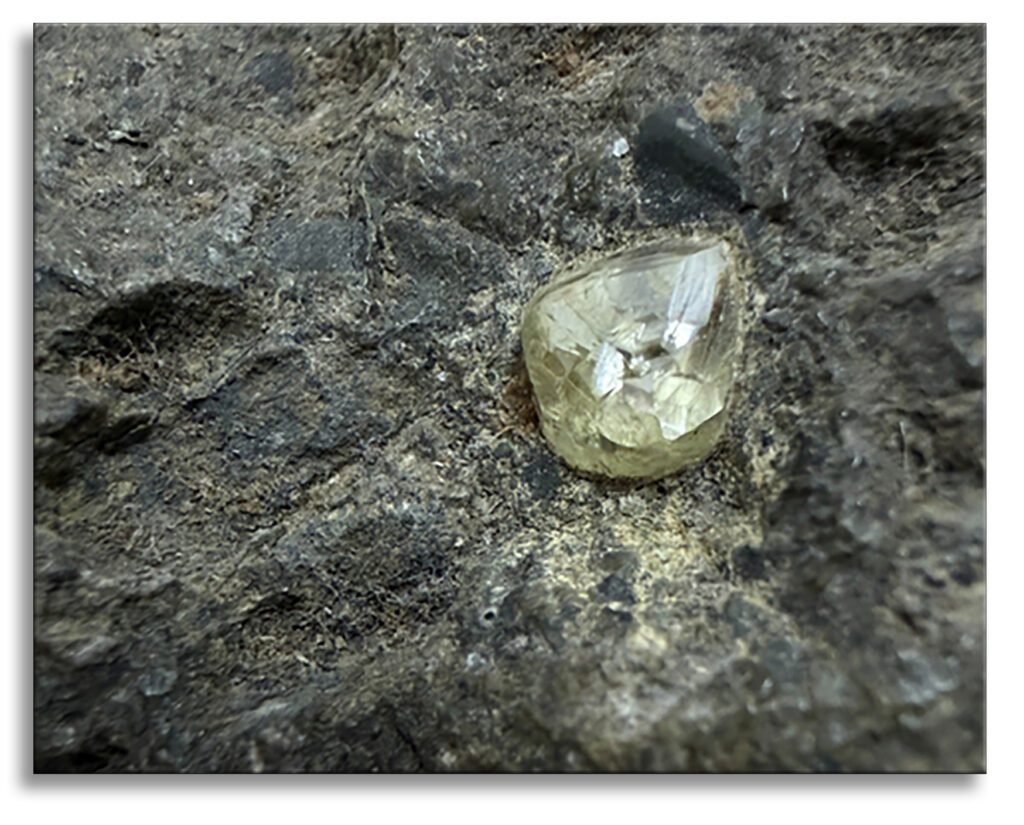
But wait – that’s not all! Look at the diamond and the label closely. It is telling us more than “when” and “where” it was found. This diamond is from “New Rush,” from Kimberley, from Cape Province. Not only is the specimen rare, but the diamond’s color is historically significant – and a near-perfect illustration – of what the trade means when describing diamond color as a “cape” stone.
In other words, this is one of those rare pieces where geology, history, and trade language all line up—and tell the same story. Wow! (Even more details, and selling price, below.)
Additional jewellery-related materials in the sale included De Beers corporate artefacts, original share certificates, historic jewellers’ advertisements and receipts, important Sotheby’s and Christie’s jewellery auction catalogues—including volumes I and II from HRH Princess Margaret’s Christie’s sale—as well as pearl master comparison sets.
Collectables & Memorabilia – Jewellery, De Beers,
Diamonds, Boxing, Horse Racing & Football Ephemera – 262 lots
Showcasing rare and highly desirable items across jewellery history, horse racing, boxing, gambling and football.
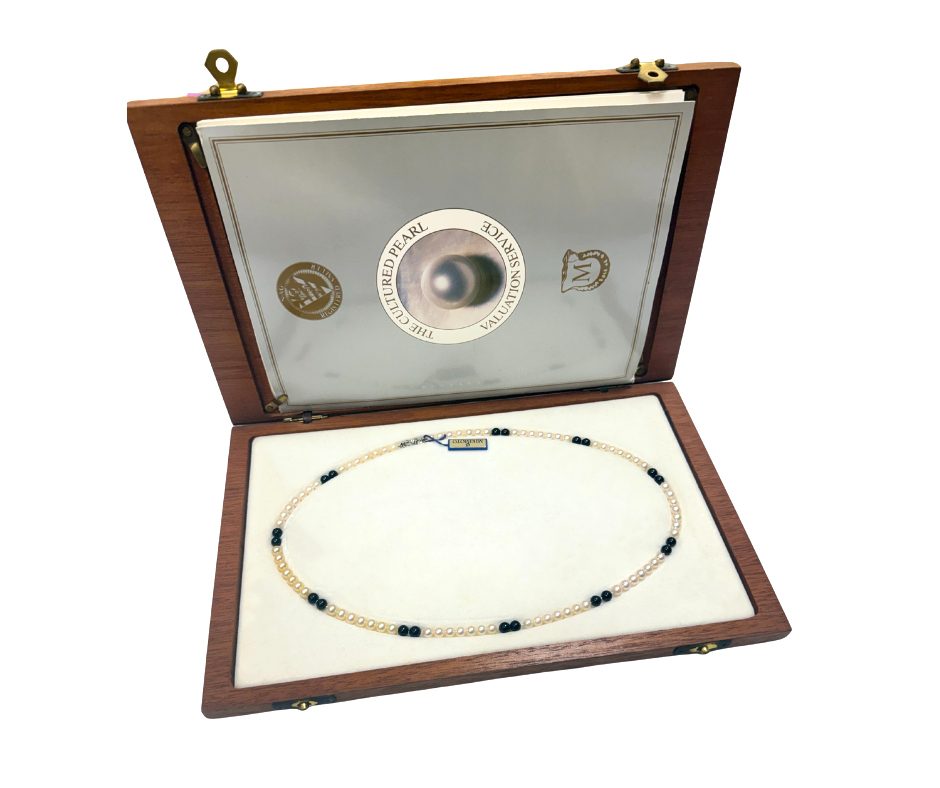
Cultured Pearl Educational Master Set with Pearl Growth Display, and “Valuer’s Guide to Cultured Pearls”
SOLD: £200
From the Catalogue:
A fascinating and highly collectible cultured pearl educational set, ideal for jewellers, valuers, students of gemmology, and collectors of jewellery-trade ephemera. This set includes three components: A master set of cultured pearls for grading. A valuers guide to cultured pearls. and an educational set showing the growth stages of pearls.
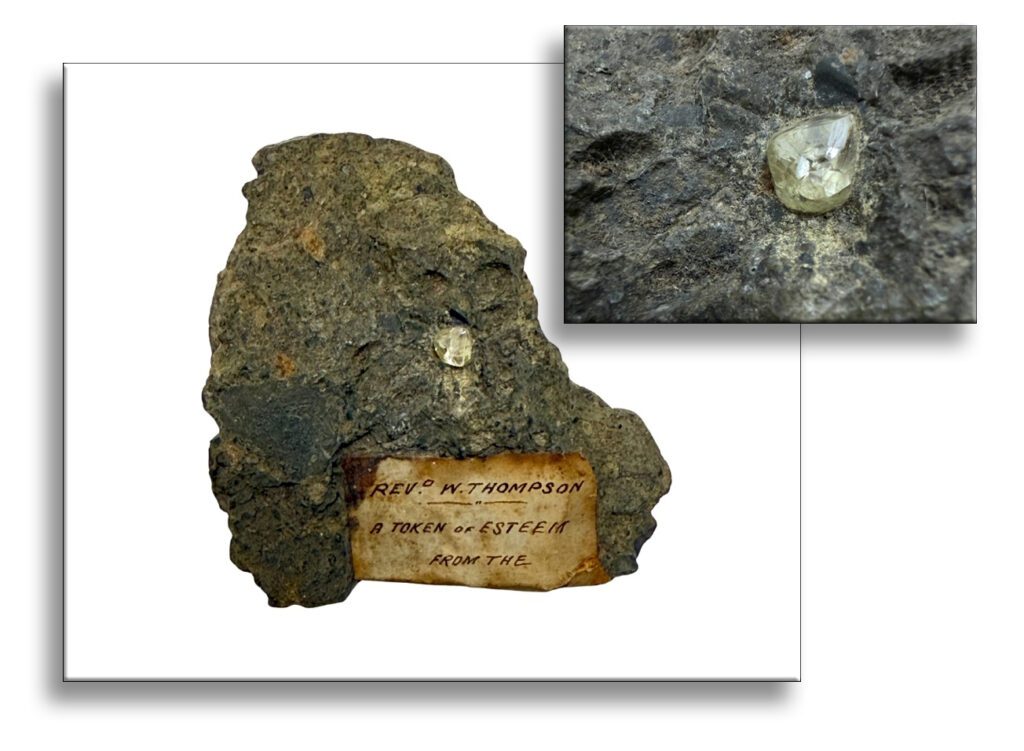
Extremely Rare Historic 19th-Century De Beers “New Rush” Kimberlite Specimen with Visible Rough Natural Diamond
SOLD: £10,500
From the Catalogue:
A profoundly rare and historically significant diamond-field relic from the earliest years of the Kimberley diamond rush. This hand specimen of kimberlite (“blue ground”) contains a visible natural diamond crystal embedded in the matrix and retains its original manuscript presentation label dated May 23rd, 1873.
The handwritten note – both on the specimen itself and on a later transcribed slip – reads: “Rev’d W. Thompson – A token of esteem from the Cong’l Church, De Beers New Rush, May 23, 1873. M.M.S., Sec’y.” This places the piece firmly within the pioneering era of the South African diamond fields, when De Beers and “New Rush” (the early name for what became Kimberley) were at the epicentre of the world’s first major diamond boom.
Surviving labelled geological specimens from this period – especially with an exposed diamond crystal – are exceptionally scarce. This is an extraordinary opportunity to acquire an authentic early De Beers field specimen—almost never seen outside institutional collections—and a tangible piece of diamond-mining history.
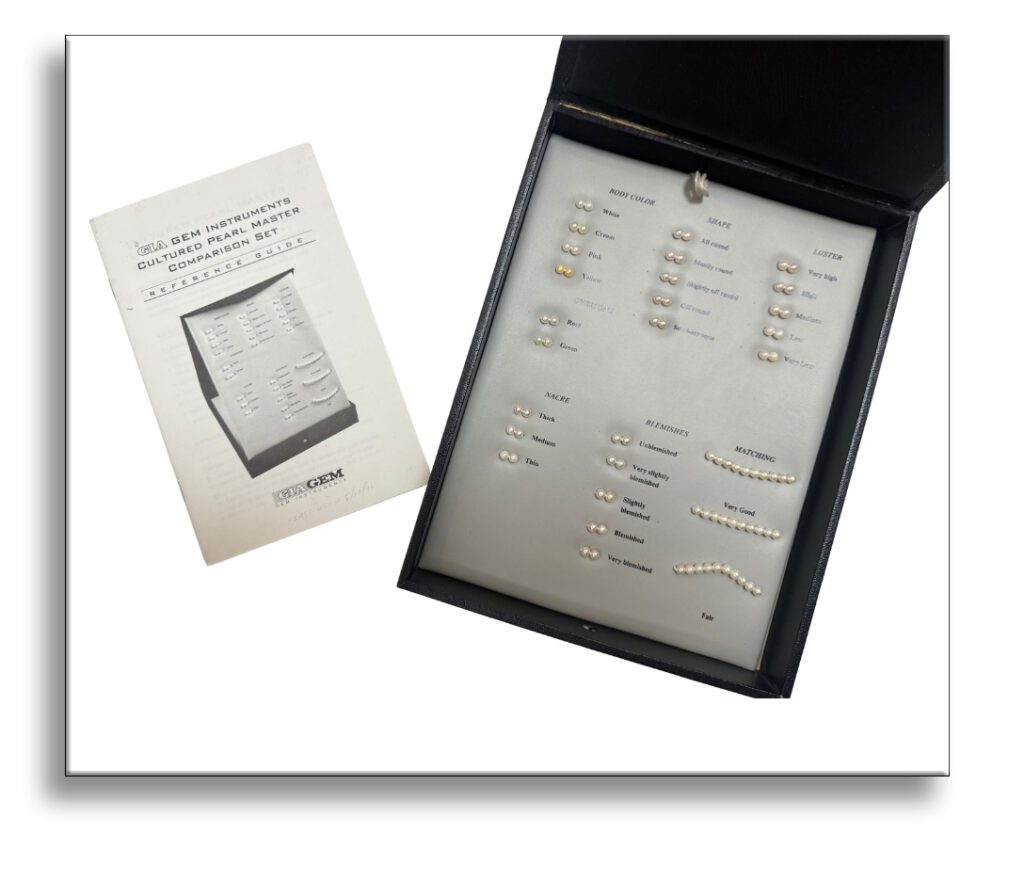
GIA Gem Pearl Master – Cultured Pearl Comparison Set
SOLD: £200
From the Catalogue:
A scarce and highly desirable GIA Gem Pearl Master Comparison Set, developed as a professional reference tool for the grading and comparison of cultured pearls. Produced for use by gemmologists, valuers, jewellers and educators, this set represents an important period in the formal standardisation of pearl assessment.
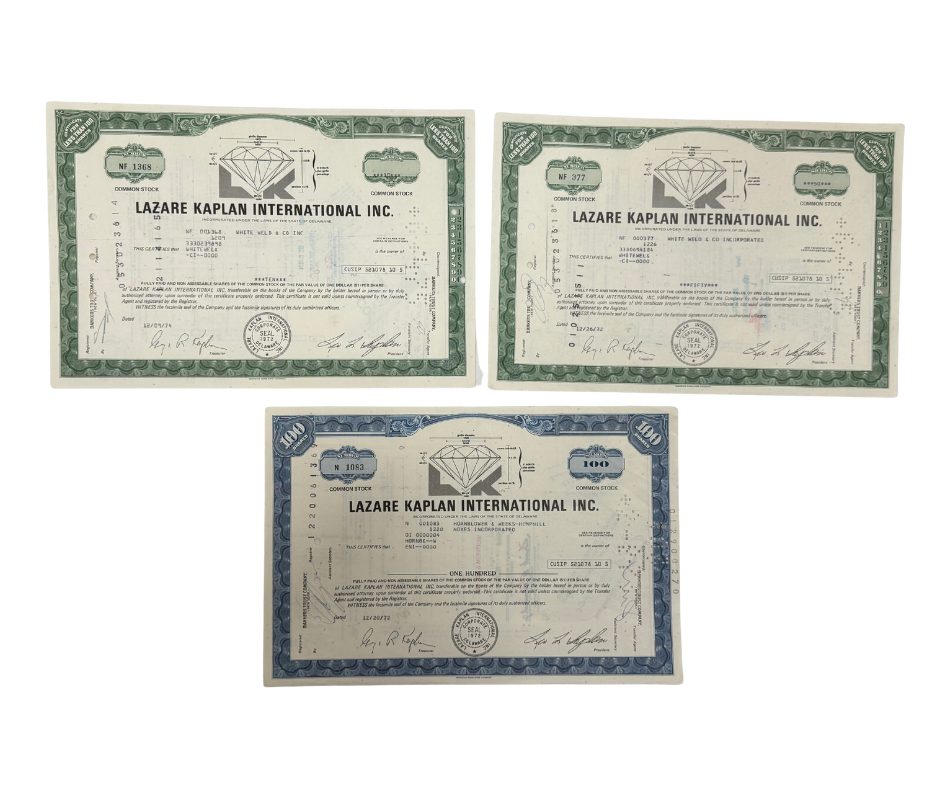
Lazare Kaplan International Inc.
– Three Diamond Share Certificates
SOLD: £30
From the Catalogue:
A group of three original share certificates issued by Lazare Kaplan International Inc., each featuring a diamond motif vignette, engraved borders and original signatures, representing varying denominations of common stock, mid-20th century examples showing handling wear and punch cancellations typical of issued certificates, highly desirable diamond industry financial ephemera.
Signed by Leo Kaplan (President) and George Kaplan (Treasurer), the certificate reflects the second-generation leadership of Lazare Kaplan International following its founding by Lazare Kaplan.
Why are these important? Who Was Lazare Kaplan?
Founded in 1903, the company grew out of Lazare Kaplan’s work as a diamond cleaver and cutter at a time when cutting decisions could permanently define a stone’s legacy. Kaplan was closely associated with some of the most important diamonds of the 20th century, including work for Harry Winston and the cutting of the legendary Jonker Diamond, a stone whose offshoots—including the Jonker IV—continue to surface at auction today. That lineage places Kaplan not just in the trade, but at the center of diamond history.
The firm’s technical philosophy was further shaped by family ties. Lazare Kaplan’s cousin, Marcel Tolkowsky, published his landmark work on ideal diamond proportions in 1919, and Lazare Kaplan International became an early advocate of precision cutting based on those principles. As the business expanded, the company established large-scale U.S. manufacturing operations in Ponce, later relocating to Caguas, helping define a generation of American diamond manufacturing. In later years, LKI was also an early mover in diamond branding, marketing stones under the Lazare Diamond name and reinforcing the connection between cutting quality, provenance, and identity.
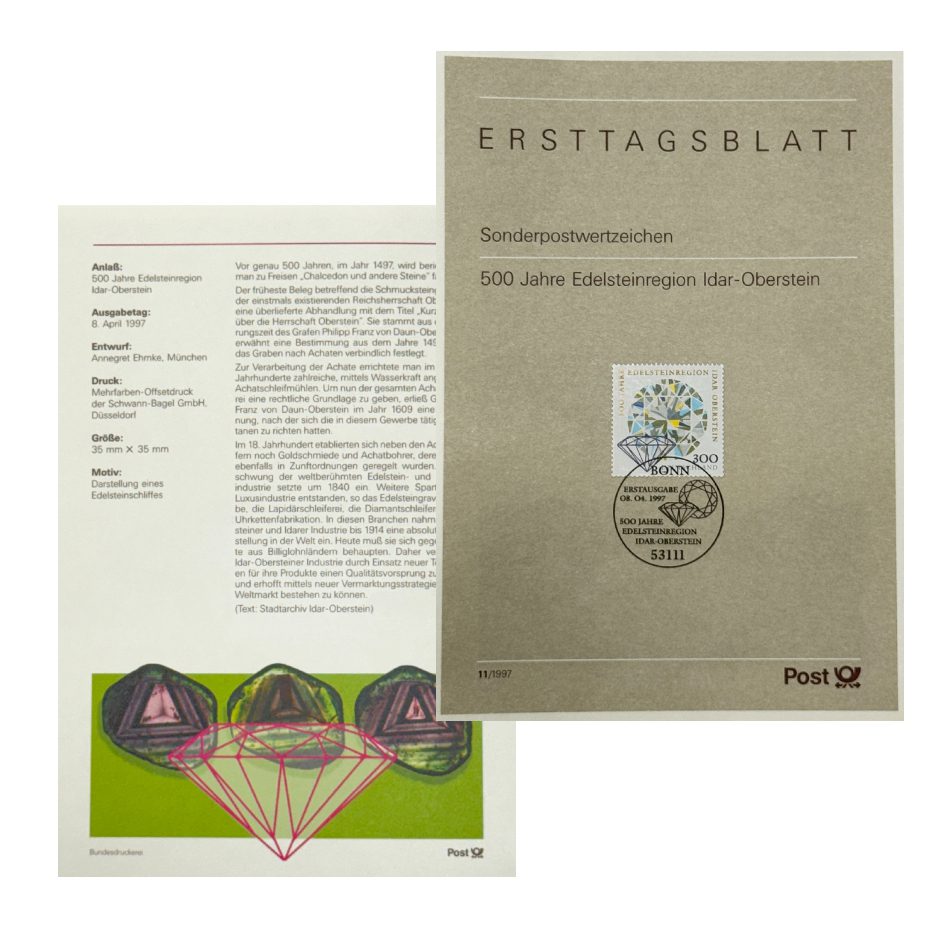
German Ersttagsblatt “500 Jahre Edelsteinregion Idar-Oberstein”
First Day Issue, 1997, Collectible Stamp
SOLD: £16
From the Catalogue:
A pristine German Ersttagsblatt (First Day Sheet) issued in November 1997, featuring the special postage stamp marking “500 Jahre Edelsteinregion Idar-Oberstein” – a tribute to half a millennium of gemstone craftsmanship in one of the world’s most historically significant lapidary centres. The stamp (300 Pfennig) showcases a geometric gemstone motif, cancelled with an illustrated first-day Bonn postmark dated 08.04.1997. The sheet remains sealed in its original protective sleeve, as issued by the German postal authority (Post). A commemorative philatelic release celebrating 500 years of Idar-Oberstein’s gemstone-cutting heritage.
Tap here to view many more lots from the Furlong Auction of DeBeers Memorabilia.