
For the past two+ years, the headlines have come quickly.
A $39 billion takeover bid for Anglo American by BHP.
Anglo American puts De Beers up for sale.
Diamond production cuts.
Billions of dollars in De Beers write-downs.
Governments enter the negotiations.
Former CEO Gareth Penny returns as a potential buyer.
Reports of a $1 billion consortium.
Individually, each headline reported the news.
Together, they reveal how one of history’s most iconic diamond companies found itself at the center of forces no one company could control.
Gary Roskin
Roskin Gem News Report
$39 BILLION?
It did not start with a $39 billion offer for De Beers.
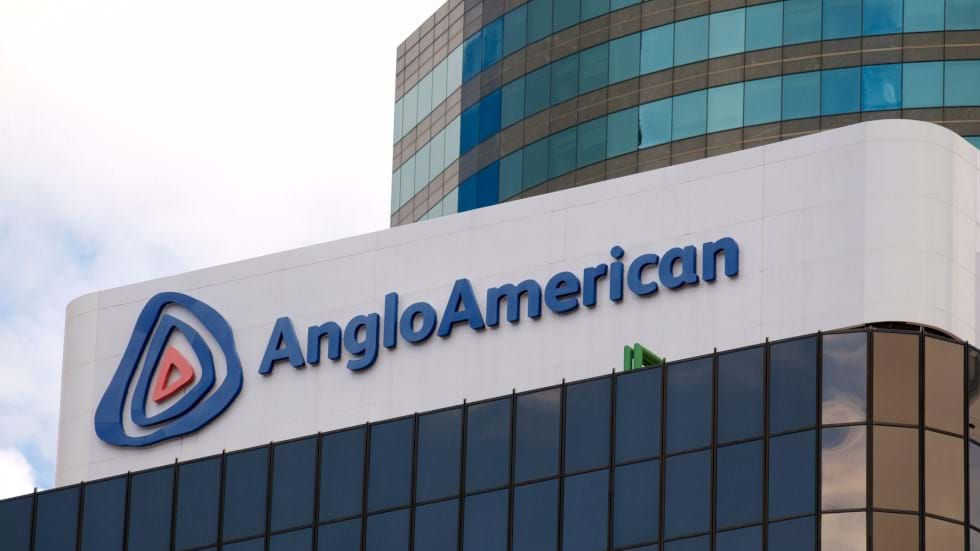
It started with a $39 billion offer for Anglo American.
When BHP launched its unsolicited takeover bid in April 2024, its objective was clear. The company wasn’t pursuing Anglo American because of diamonds. It wanted Anglo American’s world-class copper assets, which aligned with BHP’s long-term strategy of expanding its position in one of the world’s most important metals.
| BHP | Anglo American |
|---|---|
| World’s largest diversified mining company | One of the world’s largest diversified mining companies |
| Iron ore | Copper |
| Copper | Iron ore |
| Metallurgical coal | Platinum Group Metals |
| Potash (developing) | Diamonds (De Beers – 85%) |
| Nickel | Nickel |
| Crop Nutrients | |
| Manganese (joint venture) |
So yes, it started with a $39 billion offer for Anglo American—a proposal that triggered a six-week takeover battle, forced one of the world’s largest mining companies to reconsider its future, and ultimately placed one of the most famous names in the history of diamonds on the market.
BHP wasn’t looking to buy De Beers. De Beers was simply one of several businesses that came with the Anglo American package. At first, it was almost incidental to the story. BHP wanted Anglo American largely for its copper assets and other mining interests. Diamonds came with the package—but they were not the prize everyone was fighting over.
Then Anglo American rejected BHP’s offer.
And then rejected it again.
To convince shareholders that remaining independent was the better option, Anglo American announced a sweeping restructuring. Businesses would be spun off. Assets would be sold. The company would become smaller, leaner, and more focused.
De Beers would have to go.
Wait… What? They’re selling De Beers?
For the mining industry, De Beers was one business within a diversified global mining company.
For the gem and jewelry industry, it was something entirely different. It was an icon.
Of course, De Beers was a business—and businesses are bought and sold. Cartier became part of Richemont. Tiffany & Co. was acquired by LVMH. So why not De Beers?
Still, the very idea of placing De Beers on the market felt almost irreverent.
For more than a century, De Beers had helped shape the modern diamond industry. Its influence extended far beyond the mines it owned. It transformed diamond marketing, influenced consumer demand, and became one of the most recognizable names in the jewelry world.
The thought that it could simply be put up for sale felt almost unimaginable.
Yet once Anglo American made that decision, the challenge became far greater than simply finding a buyer.
When Forces Converge
The natural diamond market was already under pressure. Demand, particularly in China, had weakened. Inventories were building throughout the pipeline. Most of the major producers reduced output in an effort to restore balance. But Russia’s ALROSA continued producing despite Western sanctions and found markets beyond the G7. At the same time, synthetic (“laboratory-grown”) diamonds continued gaining market share in the jewelry sector, placing additional pressure on natural diamond prices and consumer demand.
And there was another complication.
Anglo American wasn’t simply looking for a buyer for De Beers. Any buyer would also have to navigate the interests of the governments of Botswana and Namibia—De Beers’ most important mining partners—whose long-standing relationships with the company made any sale far more complicated than a typical corporate transaction.
As the market continued to weaken, Anglo American repeatedly reduced the value of De Beers on its own balance sheet, reflecting what it believed the business was worth under changing market conditions. Each write-down made headlines—and each became another milestone in the story.
And now, two years later, reports suggest a buyer may finally have emerged.
But how did one of the world’s most recognizable diamond companies arrive at this moment?
The answer can be found in the headlines as events unfolded.
Taken one headline at a time, they simply reported the news.
But placed together in a timeline, they reveal how a $39 Billion takeover bid ultimately led to reports of a $1 Billion sale.
ACT I – THE BID NOBODY EXPECTED
It began on April 24, 2024.
Few people in the diamond industry expected De Beers to become the biggest business story of the next two years. In fact, on that Wednesday morning, De Beers was barely part of the conversation.
The headlines belonged to Anglo American.
April 24, 2024
Bloomberg News / Mining.com
“BHP targets Anglo American in bid valued at $39 billion”
The offer surprised both the mining industry and financial markets.
BHP, the world’s largest mining company, wanted to acquire Anglo American, creating one of the most powerful mining businesses in the world. The proposal valued Anglo American at approximately £31 billion—about US$39 billion at the time.
Diamonds were part of the package.
They were not the reason for the bid.
Within a day, Anglo American made its position clear.
April 26, 2024
Mining.com
“Anglo American rejects “opportunistic” $39bn takeover bid from BHP”
BHP didn’t walk away.
Over the next several weeks, BHP came back with higher and higher numbers, each rejected by Anglo American as inadequate.
By late May, the bid had reached its climax – now at $49.2 billion!
Anglo American rejected that proposal as well.
The takeover battle was now underway.
Shareholders, analysts, and the financial press watched to see whether Anglo American would eventually give in—or whether BHP would keep raising the stakes.
BHP chose the latter.
But Anglo American remained unmoved.
May 22, 2024
Mining.com
“Anglo American rejects BHP’s third bid, extends deadline”
By now, it had become clear that Anglo American wasn’t simply defending itself against a takeover. It was preparing to defend its independence.
That meant convincing investors it could create more value on its own than BHP was offering.
The solution would fundamentally reshape the company.
On May 22, Anglo American unveiled a sweeping restructuring plan. It would streamline its portfolio, focus on copper and iron ore, and dispose of businesses that no longer fit its long-term strategy.
Among them was De Beers.
A week later, the takeover fight officially ended.
May 30, 2024
OilPrice.com
“BHP Abandons Anglo American Takeover Talks”
For BHP, the campaign was over.
For De Beers, it was only beginning.
While much of the financial press focused on the takeover battle, the gem and jewelry industry was beginning to ask a different question.
May 2, 2024
Roskin Gem News Report
“AngloAmerican Turns Down $39 Billion: It’s NOT About the Diamonds”
The real story wasn’t that Anglo American had rejected BHP’s takeover bid.
It was what Anglo American had agreed to do instead.
To remain independent, the company had committed to selling one of the most recognized names in the history of diamonds.
For the gem and jewelry industry, that changed everything.
ACT II – DE BEERS GOES ON THE MARKET
The headlines that followed made one thing unmistakably clear.
Anglo American wasn’t simply considering options.
It intended to sell De Beers.
May 14, 2024
Mining.com
“Anglo American to sell De Beers, Amplats to fend off BHP”
May 14, 2024
JCK
“Anglo American Confirms De Beers Is Up for Sale”
The announcement sent shock waves through the diamond industry.
For more than a century, De Beers didn’t simply participate in the diamond industry. In many ways, it defined it. It survived wars, depressions, changing governments, antitrust actions, the blood diamond crisis, and dramatic shifts in the jewelry market.
For decades, De Beers advertised gem-quality diamonds to the world, building consumer demand that benefited the entire diamond industry. It also created one of the world’s most successful ad campaigns—”A Diamond Is Forever.”
Now its owner, Anglo American, had decided it no longer fit the future of the company.
May 15, 2024
Rapaport
“Anglo American to Sell De Beers in ‘Radical’ Restructure”
The obvious question quickly followed.
Who could possibly buy De Beers?
At first, selling De Beers seemed like just another corporate transaction. It wasn’t.
A company is offered for sale.
Interested buyers submit bids.
A transaction is completed.
But De Beers is unlike almost any other mining company.
Its value isn’t measured simply by mines, equipment, or inventory.
Its future was tied to long-standing agreements, mining licenses, sorting operations, exploration projects, and decades of partnerships with the governments of Botswana and Namibia. Any buyer would inherit not only a diamond company, but relationships that had been built over generations.
As the industry absorbed the news, another realization emerged.
Selling De Beers might prove far more difficult than announcing the decision.
That thought became increasingly apparent over the weeks that followed.
July 18, 2024
Roskin Gem News Report
“It’s Complicated: Anglo American and De Beers”
While investors naturally focused on finding a buyer, the challenge ran much deeper.
How do you place a value on a company whose fortunes rise and fall with the global diamond market?
How do you separate more than a century of history from a business that still depended on government partnerships, consumer demand, and confidence in natural diamonds?
Even before potential buyers began to emerge, it was becoming clear that this would not be a conventional corporate sale.
Finding a buyer was only the beginning.
Finding the right buyer—someone willing to pay what Anglo American believed De Beers was worth—would prove considerably harder.
Act III – What Is De Beers Actually Worth?
For years, answering that question would have been relatively straightforward.
De Beers wasn’t just another mining company. It was the world’s best-known diamond brand. It controlled valuable mining assets in Botswana, Namibia, Canada, and South Africa, maintained one of the industry’s largest rough diamond distribution systems, and owned one of the most recognized names in luxury.
But once Anglo American decided to sell, another question quickly followed.
What would someone actually be willing to pay?
February 22, 2024
JCK
“Anglo American Writes Down De Beers’ Value by $1.6 Billion”
Following its 2023 financial results, Anglo American recorded a $1.6 billion write-down, valuing De Beers at approximately $7.6 billion.
One year later, that figure would change again.
By early February 2025, Anglo American was already signaling that another write-down was likely.
The headlines that followed began providing part of the answer.
At first, finding a buyer seemed like a matter of time. It wouldn’t be.
Then the headlines began arriving.
Feb. 7, 2025
National Jeweler
“De Beers’ Production Guidance Slashed, Anglo Anticipates Another Writedown”
The first warning wasn’t about De Beers itself. It was about the market.
Anglo American remained committed to selling De Beers, but the environment was becoming increasingly difficult. Consumer demand for natural diamonds remained weak, China’s recovery continued to disappoint, and manufacturers were already holding significant inventories.
Selling a diamond company suddenly looked very different from selling almost any other mining asset.
Then came the reality check.
Anglo American concluded that De Beers was worth less than it had previously believed. Two weeks later, that conclusion became official.
February 20, 2025
The Guardian
“Anglo American writes down value of diamond firm De Beers by $2.9bn”
Following the write-down, Anglo American valued De Beers at approximately $4.1 billion, down from about $7.6 billion a year earlier.
One write-down can be dismissed as a difficult year.
A second write-down, just one year later, suggested that the problems in the market were not going away anytime soon.
The question was no longer whether the diamond market was soft.
It was how long those conditions might continue—and what that meant for the value of De Beers.
Stockpiles
The write-down reflected more than accounting. Behind it was one of the industry’s largest rough diamond stockpiles since the 2008 financial crisis.
Rough diamonds that normally would have been sold simply weren’t moving.
As rough accumulated, cash did not.
Remember, De Beers could reduce production and hold back rough, but it couldn’t control the global market. Russia’s ALROSA continued mining and selling diamonds. That made restoring balance between supply and demand far more difficult.
And of course the growing stockpile became a visible reminder that the issue wasn’t production.
It was demand.
June 5, 2025
Mining.com
“Former De Beers CEOs circle diamond giant as sale nears”
For the first time, serious buyers were beginning to emerge.
But their interest didn’t answer the most important question.
By mid-2025, the question was no longer whether Anglo American wanted to sell De Beers.
It clearly did.
The question had become far more difficult.
What was De Beers actually worth?
And was anyone willing to pay it?
ACT IV – Who Would Buy De Beers?
By mid-2025, the question was no longer whether Anglo American wanted to sell De Beers.
It clearly did.
The challenge now was finding a buyer willing to pay the price—and capable of navigating the long-standing partnerships between De Beers, Botswana, and Namibia.
The headlines that followed revealed just how many interests were now competing for De Beers’ future.
July 23, 2025
JCK
“Botswana Wants Majority Stake In De Beers: Report”
Botswana had long been more than a mining partner.
Through Debswana, the country and De Beers had spent decades building one of the world’s most successful diamond-producing partnerships. If ownership of De Beers was about to change, Botswana wanted a larger voice in deciding what came next.
Two months later, another diamond-producing nation signaled that it, too, wanted a seat at the table.
September 23, 2025
Forbes Africa
“Angola Confirms Ambition For Strategic Stake In De Beers”
Suddenly, the discussion extended far beyond private investors.
Any successful buyer would need more than financial resources.
They would also need the confidence of governments whose economies and mining industries had been intertwined with De Beers for generations.
Then…
The headlines grew quiet.
For months, little was said publicly as negotiations continued behind closed doors.
Potential buyers evaluated the business.
Governments weighed their options.
Anglo American considered its next move.
Finally, there was another sign that the process was nearing its conclusion.
June 16, 2026
JCK
“De Beers Sale Could Be Finalized Within Weeks, CEO Says“
After more than two years of uncertainty, the finish line finally appeared to be in sight.
Just over a month later, reports identified the leading bidder.
July 21, 2026
National Jeweler
“Anglo Reportedly Selects Gareth Penny’s Consortium as Top Bidder for De Beers”
For many in the diamond industry, the name was immediately familiar.
Gareth Penny wasn’t an outsider hoping to acquire De Beers.
He had served as De Beers’ Chief Executive Officer from 2005 to 2010.
If the reports proved accurate, one of De Beers’ former leaders would return—this time as the head of the group attempting to purchase it.
Then came the headline that completed the journey.
July 29, 2026
Mining Weekly
“Anglo said to be in talks to sell De Beers for about $1bn”
Just over two years earlier, BHP had offered approximately $39 billion to acquire Anglo American.
Now, reports suggested that De Beers—the iconic diamond company at the center of that story—might be sold for about $1 billion.
Of course, the comparison isn’t direct.
The original $39 billion proposal was for all of Anglo American, not De Beers alone.
But the headlines tell an extraordinary story nonetheless.
A takeover battle involving one of the world’s largest mining companies.
A decision to sell an iconic diamond company.
Successive multi-billion-dollar reductions in value.
Governments seeking a greater role.
A former chief executive returning as a potential buyer.
And, finally, reports of a possible $1 billion deal.
Individually, each headline simply reported the news.
Together, they answer the question posed at the beginning of this story: How did we go from $39 billion to $1 billion?
The answer was there all along—in the headlines.
Sources
This timeline was reconstructed from contemporaneous reporting published between April 2024 and July 2026. The headlines reproduced throughout this feature reflect reporting by Reuters, Bloomberg, Financial Times, Mining.com, Mining Weekly, JCK, National Jeweler, Rapaport, Forbes Africa, The Guardian, Roskin Gem News Report, and other industry publications.